
Place
Minish Realm
Location in The Minish Cap
The Minish Realm is a location in The Minish Cap.
Features and Overview
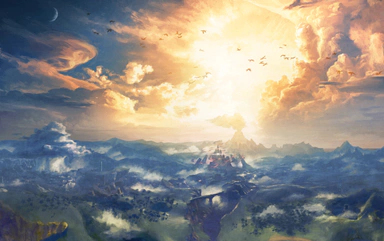
The Minish Realm is the homeland of the thumb-sized Minish race that is briefly seen in a cutscene from The Minish Cap. As the homeland of the Minish, it is also the homeland of Vaati, an evil Minish that would eventually become an infamous wind demon, and his former master Ezlo, one of the greatest sages of the Minish race. This Minish Realm is connected to the land of Hyrule via the Minish Door that only opens once very briefly every 100 years. When this door opens, the two worlds are connected via the Elemental Sanctuary that is located within the courtyard of Hyrule Castle. Though Vaati originally called this Minish Realm home, he became enchanted by the evil that could come from the hearts of men and longed to become a sorcerer in his own right. He seized his chance when he stole the Mage's Cap from his master's workshop and fled through the Minish Door, which coincidentally was opening at the same time, hoping to acquire the legendary Light Force wherever it was in the land of Hyrule. Ezlo, having been cursed into the shape of a cap himself by Vaati, followed his former apprentice through the Minish Door in an attempt to stop him, and after Vaati's defeat and his subsequent restoration to his original form, Ezlo returned to the Minish Realm through the Minish Door just as it closed for another century.
Hyrule Through the Eyes of the Minish
The term "Minish World" is also used by Ezlo to refer to Hyrule itself, only as seen and lived in larger scale, through the eyes of a tiny Minish. It is accessed through Minish Portal via the use of Ezlo. In the Minish Realm, normal enemies appear giant, and some even function as Boss, like the guardians at the end of the Deepwood Shrine and the Temple of Droplets, two Dungeon entered and explored exclusively from the Minish Realm.
The Overworld Minish create homes in mushrooms, old boots, pots, holes in house drywall, and cracks in the ground, and adorn them with objects commonly found in the surrounding area, along with small tables, chairs, and beds.
Sources
Adapted from the original article, under GFDL 1.3.
