
Work
The Legend of Zelda: Phantom Hourglass
Fourteenth main installment of The Legend of Zelda series
The Legend of Zelda: Phantom Hourglass is the fourteenth main installment of The Legend of Zelda series. It was released in 2007. It is the first The Legend of Zelda game for the Nintendo DS and a direct sequel to The Wind Waker.
The development team for Phantom Hourglass has many returning developers from Four Swords Adventures, many of whom, in turn, were chosen from those who worked on A Link to the Past.
The Japanese version of the game is called The Legend of Zelda: Hourglass of Dreams.
This article is about the game. For the item, see Phantom Hourglass (Item). For other uses, see Phantom Hourglass (Disambiguation).
Search for the Ghost Ship
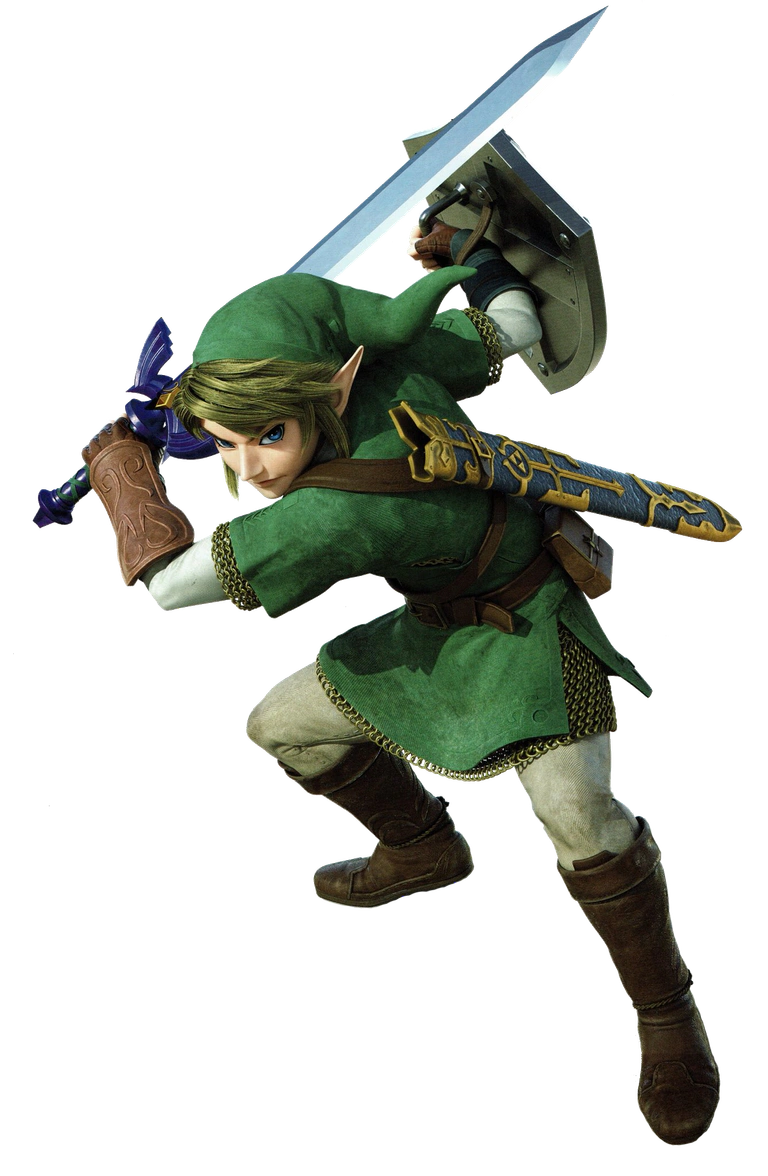
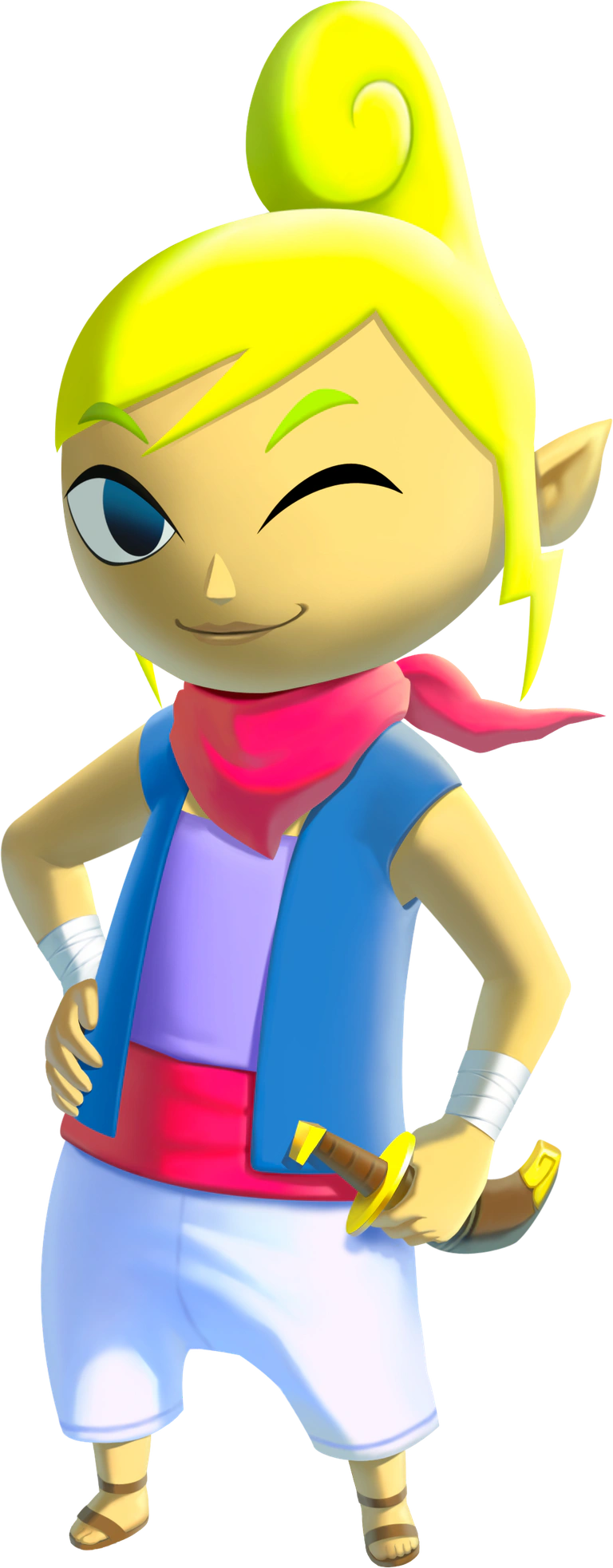
Set some time after the events of The Wind Waker, Phantom Hourglass opens with Tetra and her pirate crew along with Link the Hero of Winds chasing down a ghost ship claimed to have taken sailors and residents of the local islands. The crew discovers the ship, but when Tetra goes aboard to explore, she disappears. Link attempts to follow her but ends up adrift in the ocean.

Link later recovers through the help of the fairy Ciela, who has some amnesia about her past, and an old man named Oshus, who help Link on his quest to find the ghost ship and reunite with Tetra. To that end, they enlist the help of the reluctant Captain Linebeck and his ship after saving him from the Temple of the Ocean King; Linebeck only offers to help with the expectation of finding treasure along the way. Link discovers that to learn of the ghost ship's position, they must find the Spirits of Courage, Wisdom, and Power, using maps and clues hidden in the Temple of the Ocean King. However, to overcome the evil forces in the Temple, Link must make use of the Sands of Hours within the Phantom Hourglass and possessed by other creatures around the islands to prevent his life force from being drained. With the aid of the Hourglass, Link is able to locate and ally with the Spirits of Wisdom and Power easily, but the Spirit of Courage he finds looks exactly like Ciela. Oshus explains that Ciela is actually the Spirit of Courage and she lost her memory when Bellum attacked her. He also reveals that he himself is the Ocean King. Oshus further explains that he and Ciela had to take their present forms to hide from the life-eating monster Bellum, who is the cause of the ghost ship and other evil in the local area, and has taken residence at the very depths of the Temple. Link succeeds in his attempt to rescue Tetra with the help of the three Spirits, but finds Tetra is now a statue, a further effect of Bellum's life-draining power. Link is ready to continue but Linebeck initially refuses to help further having come up empty-handed for treasure so far, though agrees to continue once Oshus promises to grant Linebeck one wish after Link's quest is complete.
The weapon to banish Bellum
Link learns that the only way to defeat Bellum is to forge the Phantom Sword from three unique, pure metals around the local islands. After collecting the materials and forging the Phantom Sword, Link descends to the bottom level of the Temple, and initially appears to defeat Bellum. Tetra is freed from the statue form and revived, but before the group can celebrate, Bellum reemerges from the ocean depths and takes Tetra again. In the ensuing battle of the SS Linebeck and the ghost ship, Linebeck's ship is lost, as well as Oshus, and Link and Tetra are captured. Linebeck reluctantly picks up the Phantom Sword and is able to free Link and Tetra, at the cost of his own freedom, but is able to give Link back the Phantom Sword before Bellum possesses Linebeck and turns him into a Phantom-like knight, but Link is ultimately able to vanquish Bellum without harming Linebeck.
As the adventure closes, the sand from the Phantom Hourglass is released into the sea. Oshus, now in his true form of a gray, blue, and white whale, readies to depart with the Spirits, while Linebeck, surprising everyone, wishes not for treasure but for his ship back. After everyone says their goodbyes, Link and Tetra find themselves back on the pirate ship, where it seems only ten minutes have passed for the rest of the crew and they insist that it was all a dream. However, Link still possesses the now-empty Hourglass, and spies Linebeck's ship on the horizon, knowing full well that his adventure was real.
Gameplay
Phantom Hourglass is an action-adventure game, and its gameplay is structured similarly to other games in The Legend of Zelda series. As the game follows chronologically after The Wind Waker, the game is primarily divided into two major gameplay sections: sailing between islands, and exploring the islands and their dungeons on foot.

Overworld Exploration
To travel between islands, Link is given control of a paddle steamer called the SS Linebeck. Link can plot a course by drawing on a sea chart, redrawing the course to make alterations as needed. While on a voyage, he can shoot at enemies attacking the ship and jump to avoid obstacles that may appear. Link can also salvage treasures from the ocean floor, go Fishing, or quickly warp to remote points once certain symbols are learned.
When on land, the game shows a map of the area on the top screen, and a 3D top-down view of Link and his nearby surroundings on the lower screen. At nearly any time, the map can be brought down to the lower screen and be drawn on using the stylus, typically to make notes but also to identify locations of objects for later reference or to control certain aspects of the world. Link is controlled through the stylus, moving him around by pointing to the sides of the screens, and also interacting with objects and people or attacking foes by tapping on them; other motions with the stylus can be used for additional moves and attacks. Tools common to The Legend of Zelda series, such as the Boomerang, Grappling Hook, and Shovel, are acquired through the game, and are used to open new passages to acquire additional treasures, all used by either pointing or drawing with the stylus. The game also uses the microphone for some events, including blowing out fires and defeating certain types of monsters, and other aspects of the DS system, such as closing the unit to create an imprint on a map.
Stealth
The game possesses a number of stealth elements. In certain dungeons, near-invincible sentries known as Phantoms may roam the floor, with their location and direction visible to Link on the map, and will chase him down if he is spotted or makes a loud noise. However, special areas on these floors allow a safe haven for Link to stay undetected in, even if he was detected just moments before. These special areas also play a role in the main dungeon, the Temple of the Ocean King. This temple is filled with a miasma that will sap Link's life unless Link stays in these special areas or time remains in the Phantom Hourglass (Item). The amount of time in the Hourglass can be restored by returning to sunlight, and additional time is gained by defeating the primary bosses within the game, as well as an occasional reward in the treasure hunting game. The hourglass can be expanded to a maximum of 25 minutes.
Battle Mode
The Battle Mode is a player-versus-player game mode separate from the main story. In this mode, two players control a Link and compete against each other in a variety of eight different maps where, turn by turn, a Link must retrieve Force Gems while the other Link tries to prevent him by controlling and attacking with three Phantoms.
Tag Mode
The Tag Mode allows players to trade treasures and ship parts. It is unlocked after meeting Freedle on Mercay Island.
Graphics and Audio
The game's graphics are done in the style of The Wind Waker. The game is played with a top-down perspective, but with 3D graphics. The models for the characters, as well as that of enemies and bosses, are also reminiscent of the 2003 Zelda entry.
In a similar style to that of the early 2D installments in the series, the game's audio has a commonplace theme for each type of environment (a town, a wild field, a dungeon, a boss battle, the sea, a minigame, and during the retrieval of a sunken treasure). Other than that, though, the music is reminiscent of that of The Wind Waker.
Setting
The game takes place in the World of the Ocean King, a land similar to the Great Sea in The Wind Waker. Although the insular territory is more compact, the islands are bigger in size and have a higher population level, as well as more areas to be explored and a more interactive landscape. This world consists of twenty different islands.

The world is divided in four quadrants: the most inhabited is the southwestern quadrant, where different activities (shopping, fishing, ship maintenance, etc.) are performed. In the northwestern quadrant, only two islands are barely inhabited, not to mention that the westernmost waters are initially surrounded by an unnatural mist. The southeastern quadrant is the home of two major tribes (the Gorons and the Anouki), as well as certain islands that serve as recreational places. Finally, the northeastern quadrant is by far the most abandoned, being the former home of the Cobble Kingdom and now infested by evil creatures.
Timeline Placement
The game is set after the events of The Wind Waker, which makes it the second confirmed entry in the Adult Timeline. It is followed 100 years later by Spirit Tracks, which is situated in a new land that was discovered eventually by Link, Tetra and her pirate crew.

Phantom Hourglass Stylus
During the release of the game, a transparent Phantom Hourglass-themed stylus shaped like a feather pen was made available for a limited time. It could only be obtained by registering the game on Nintendo's website and taking the subsequent survey.
DS Lite Special Edition Bundles
A special limited edition bundle was released both in North America and Europe, each one including a copy of the game and a Zelda-themed console. The North American version included a golden console with the Triforce, and the European version a silver console with the game logo and artwork of Link and Ciela. The European edition was limited to 1,000 copies.
Sources
Adapted from the original article, under GFDL 1.3.