
Work
The Legend of Zelda: The Wind Waker
Tenth main installment of The Legend of Zelda series
The Legend of Zelda: The Wind Waker is the tenth main installment of The Legend of Zelda series. It is the first Zelda game for the Nintendo GameCube and the sixth game in the series to be released on a home console. It was released in Japan on December 13, 2002, in North America on March 24, 2003, in South Korea on April 16, 2003, in Europe on May 2, 2003 and in Australia on May 7, 2003. The Japanese version of the game is known as The Legend of Zelda: Baton of Wind.
The Wind Waker is notable for being the first game in the series to employ cel-shading, a lighting and texturing technique that results in the game having a cartoon-like appearance (which was met with significant controversy among fans before release). It also differentiates itself from other Zelda games with its massive Overworld, the Great Sea, which must be explored using a boat, the King of Red Lions. It is an indirect sequel to Ocarina of Time, taking place several hundred years after the events of the previous Nintendo 64 installments.
Although the seafaring gameplay and cartoon-like graphics were a point of critique for some, The Wind Waker was, in the end, the fourth best-selling GameCube game of all time. However, it should be noted that pre-orders of the game were significantly boosted by the inclusion of a pre-order bonus disc, which features Ocarina of Time and Master Quest. Master Quest is an altered port of the original Ocarina of Time, with partially re-designed, more difficult dungeons.
In 2007, a direct sequel to The Wind Waker, entitled Phantom Hourglass, was released on the Nintendo DS.
During a Nintendo Direct on January 23, 2013, an enhanced remaster of the game was announced for the Wii U console, called The Wind Waker HD, and was released during the Fall of that year. During another Nintendo Direct on April 2, 2025, it was confirmed that it would be a part of the Nintendo GameCube of the Nintendo Classics library of classic games, and was launched on June 5th for the Nintendo Switch 2.
Synopsis
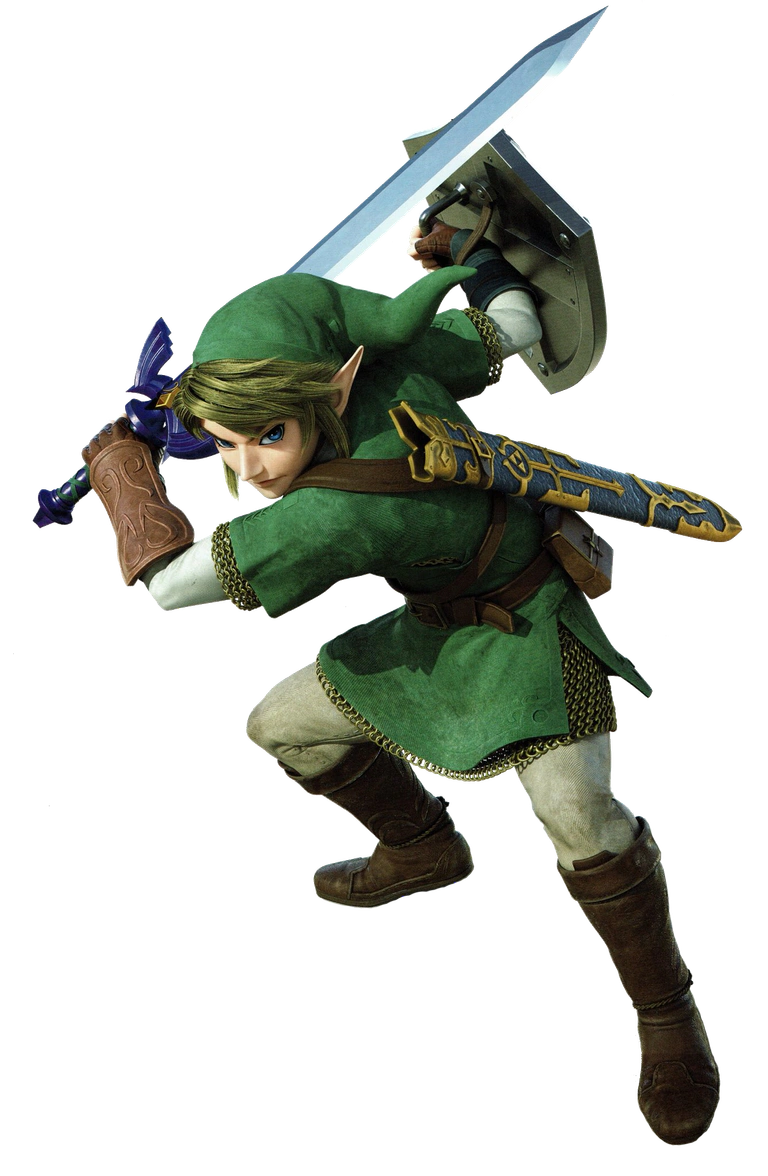
Set hundreds of years after the events of Ocarina of Time, The Wind Waker finds the hero Link in a sea scattered with 49 islands, which necessitates frequent sailing and naval combat. Link lives with his grandmother and younger sister Aryll on Outset Island, one of the few inhabited islands in the Great Sea. The people of the Great Sea pass down a legend of a prosperous kingdom with a hidden golden power. An evil man found and stole this power, using it to spread darkness until a young boy dressed in green sealed the evil with the Blade of Evil's Bane. The boy became known as the Hero of Time and passed into legend. It is clear that this legend is the story of Ocarina of Time, wherein the Hero of Time, Link, fought Ganondorf in a fierce duel and sealed him away to the Evil Realm. When boys on Outset Island come of age, they are customarily dressed in green to pay reverence to the Hero of Time.

The Great Flood
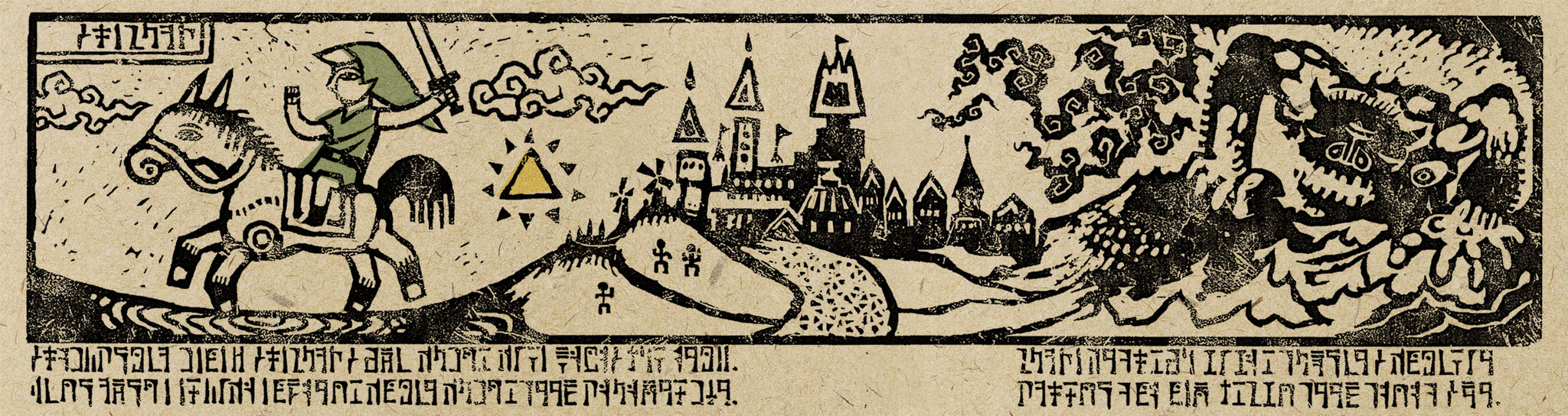
Ganondorf, the great evil that all still thought to be sealed away in the Sacred Realm of Hyrule, crept forth, eager to resume his dark designs. As the darkness was spreading over the kingdom once more, the people hoped that the legendary Hero of Time would once again appear to save them, but no hero did appear. Ganon's next step was to make another aggressive move for the Triforce. The current King of Hyrule, Daphnes Nohansen Hyrule, attempted to stop the fiend, but was not strong enough.
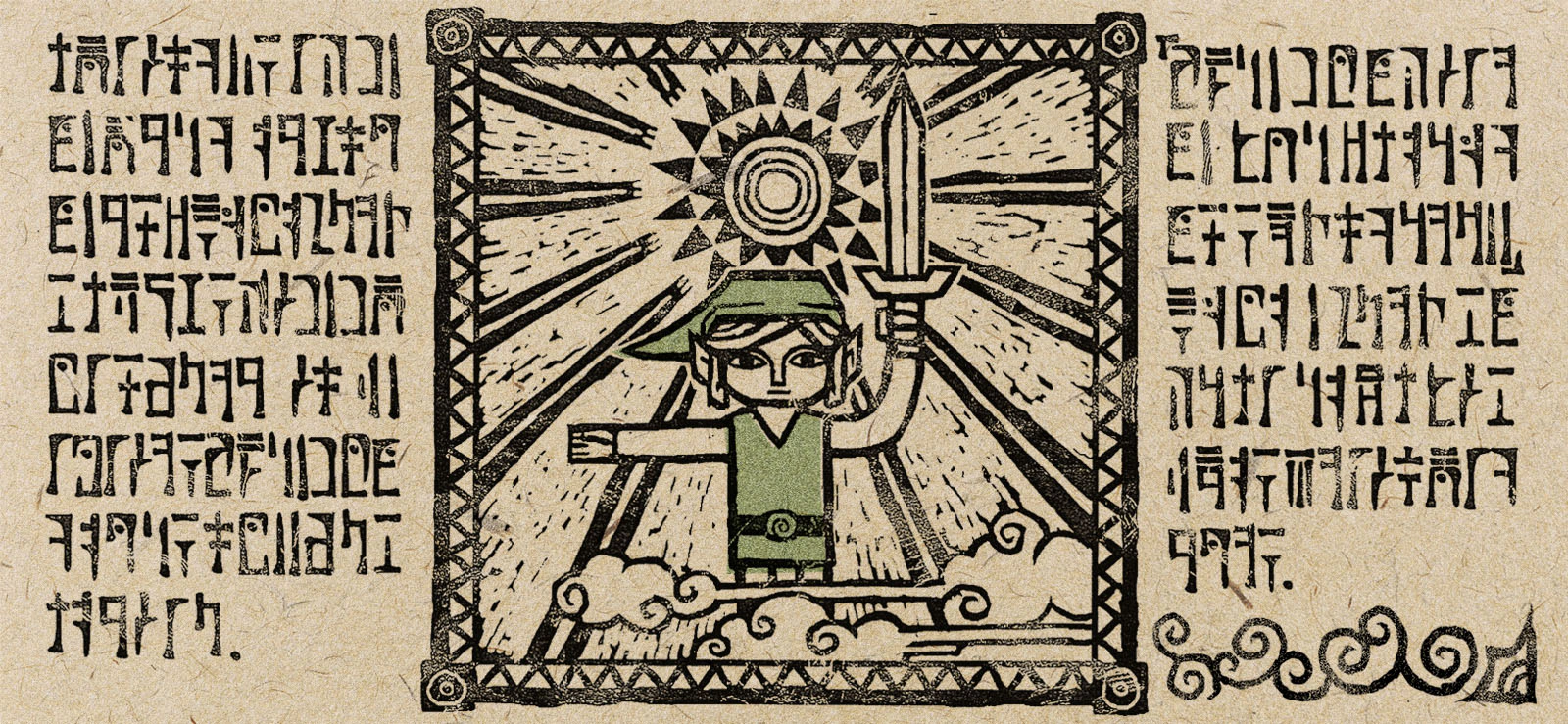
As doom drew nigh, the king and his people prayed to the gods, leaving their kingdom in the hands of fate. The goddesses answered their prayers by instructing those chosen to flee for the mountaintops, before they flooded the land. Ganondorf and his minions were sealed along with Hyrule in an enchanted air chamber at the bottom of the sea, with the Master Sword serving as the key suspending the flow of time within the chamber. Over the centuries, the memory of the kingdom vanished, but its legend survived on the wind's breath.
Link's Quest
On Outset Island, a young boy named Link finally comes of age to wear the green of the legendary hero. Link's younger sister Aryll's present to him is permission to use her Telescope. With it, Link sees the Helmaroc King fly over the island, carrying a young girl in its talons. A pirate ship is pursuing the bird, firing at it with a Cannon. One of the projectiles causes the gigantic bird to drop the girl, who lands in a tree in the forest atop the island. Link grabs a sword and rushes off to find the girl. Link learns that her name is Tetra, and that she is the captain of that band of Pirates.

As Link leads Tetra back to her ship, the bird swoops down and kidnaps Aryll, mistaking her for Tetra. A Rito postman named Quill informs the stunned Link and the unsympathetic Tetra of stories of a large bird who kidnapped young girls with long ears and took them to the cursed Forsaken Fortress. He charges Tetra with helping Link rescue his sister from the Fortress. Tetra reluctantly accepts, and with her help, Link is able to infiltrate the Fortress and reach the cell where his sister is being kept. However, the giant bird discovers him, and at the slient command of a sinister shadowy figure, it hurls him into the sea.
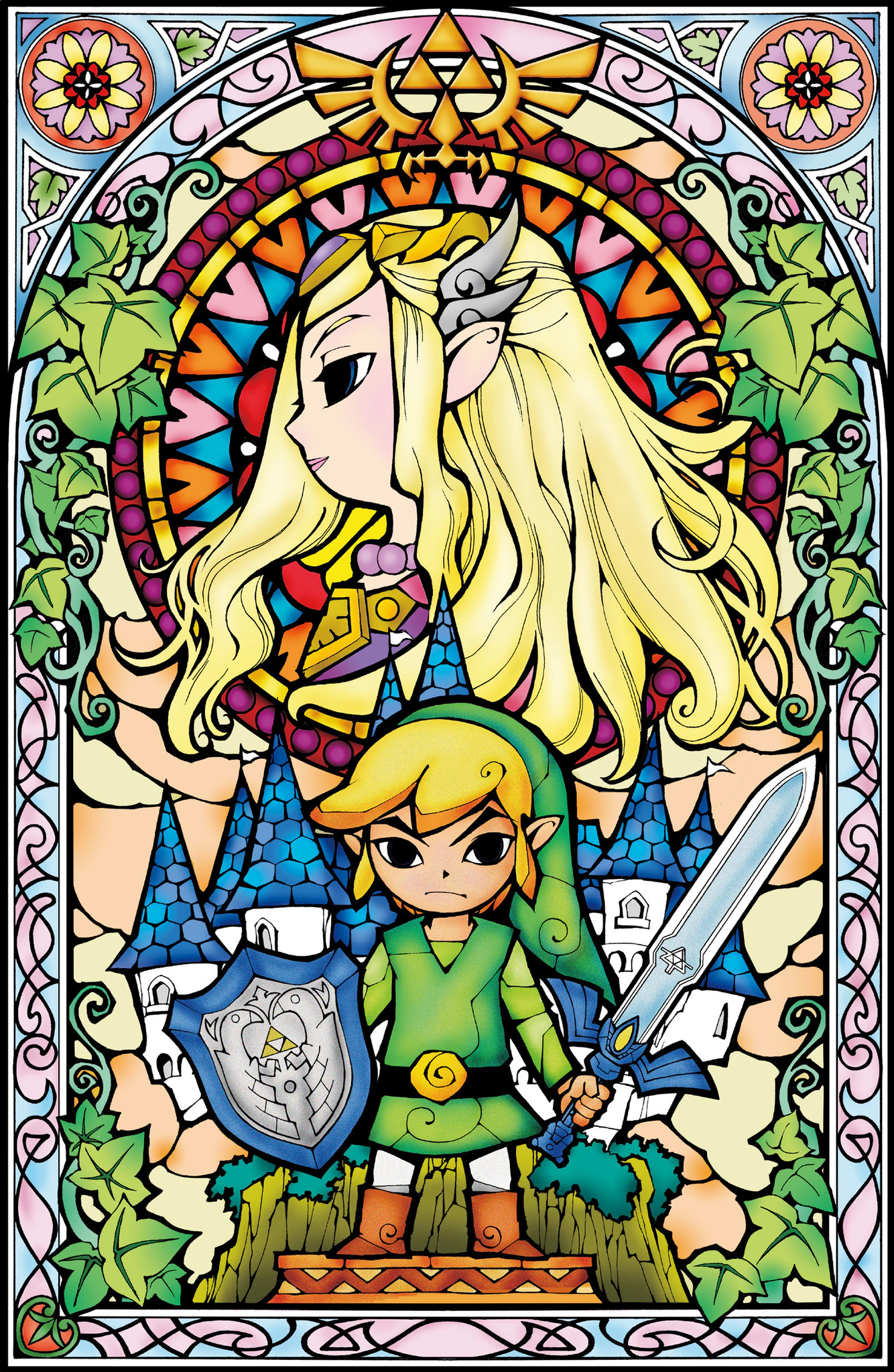
Link is recovered by a talking boat, who introduces itself as the King of Red Lions. The King tells him of the story behind the shadowy figure at the Forsaken Fortress, revealing it to be Ganondorf. Somehow, the seal of the gods had failed. After Link admits to the boat he will do anything possible to save his sister from the fiend, the King explains to him that the key to defeating Ganondorf, the Master Sword, is locked away in a great power, which can only be wielded after many trials are overcome.
To access this power, Link must gather the three Goddess Pearls. First, Link and the King of Red Lions venture to Dragon Roost Island, home of the Rito tribe, in search of Din's Pearl. Before Link takes off, the King gives Link an ancient conductor's baton called the Wind Waker, which he can use to control the wind and navigate the Great Sea easier. Link meets up with Quill again and learns that the Rito are having trouble with the Sky Spirit, Valoo, atop the mountain on the Island. Fledgling Rito earn scales from Valoo that allow them to grow their wings, but the Dragon has somehow lost control of itself. He also learns that Din's Pearl is in the possession of a young Rito boy named Prince Komali, who is afraid of earning a scale from Valoo. However, Komali refuses to give the Pearl to Link, as it is a gift from his deceased grandmother. With the help of a friendly Rito girl named Medli, Link ascends the mountain and learns that a large beast named Gohma is responsible for Valoo's outrage. Link defeats Gohma and brings Valoo back to his senses. Prince Komali gives Din's Pearl to Link and is inspired to earn a scale from Valoo.
Link then sets out for Forest Haven, home of the Koroks and the Great Deku Tree, to find Farore's Pearl. The Great Deku Tree gathers his Korok friends to conduct a ceremony to give Link Farore's Pearl, but a Korok named Linder flies in and informs the Great Deku Tree that their friend Makar has fallen into the Forbidden Woods, a vine-covered island infested with monsters. The Great Deku Tree immediately requests Link to save Makar from the sinister island, and Link agrees to do so. He finds Makar in the depths of the dungeon and saves him from Kalle Demos, earning him Farore's Pearl from the Great Deku Tree.
Link and the King of Red Lions set sail for Greatfish Isle to obtain Nayru's Pearl from the Water Spirit Jabun. However, they find the island ravaged and Jabun nowhere in sight. Quill arrives and informs Link that Jabun fled to a cave behind Outset Island to hide from Ganondorf. However, he tells Link that the cave is blocked by a Giant Stone Doorway that cannot be penetrated and that Tetra and her Pirate Crew tried to break through it to no avail. Quill tells Link to find the Pirates on Windfall Island if he wishes to see Jabun. As an endless nighttime storm appears over the Great Sea, Link sails there and discovers that the Pirates have tied up Bomb-Master Cannon and are stealing his Bombs. After overhearing Gonzo telling Mako the Password to enter Tetra's Ship, Link proceeds to the ship and uses the Password to gain entry. He takes the Bombs the Pirates have stolen for himself and returns to Outset Island to break into Jabun's cave with them. Although he is skeptical about Link, Jabun agrees to hand Nayru's Pearl over to him. Link proceeds to place the Goddess Pearls on their respective statues on the Triangle Islands, which causes the Tower of the Gods to rise from the depths of the Great Sea.
Link scales the Tower of the Gods and defeats its guardian, Gohdan, who opens a portal to the roof of the Tower. Link finds a giant bell on the roof and rings it, revealing a golden portal on the waves in front of the Tower. Link and the King of the Red Lions enter it and travel beneath the waves to find a castle suspended in time. Link explores the castle and finds the Master Sword, the Blade of Evil's Bane capable of banishing Ganondorf. Link pulls the Sword out of its Pedestal, which restores the flow of time to the castle. Afterwards, Link returns to the Forsaken Fortress and defeats the Helmaroc King while Tetra and her Crew rescue Aryll. Link confronts Ganondorf, but the Master Sword proves to be ineffective against him as he tries to strike him down as revenge for kidnapping Aryll. Ganondorf punches him back and reveals that while the Master Sword is indeed the Blade of Evil's Bane, it is also the key to sealing his magic. Link broke the seal by pulling the Sword from its Pedestal and restoring the flow of time to the castle beneath the Sea. Ganondorf overpowers Link and declares that the Master Sword's power is gone. Tetra intervenes before the villain could kill Link, but Ganondorf overpowers her as well, and then his Triforce of Power resonates. He realizes that Tetra is in fact Princess Zelda, and recognizes Tetra's necklace as a fragment of the Triforce of Wisdom. Quill and the newly-bewinged Prince Komali swoop in and save Link and Tetra before Valoo engulfs Ganondorf's tower in flames.
The King of Red Lions takes Link and Tetra back to the Castle beneath the Sea and reveals that they are in the kingdom of Hyrule, which was flooded by the goddesses after the events of Ocarina of Time to prevent Ganon's return. The King of Red Lions also reveals himself to be Hyrule's king, Daphnes Nohansen Hyrule. He fuses the missing shard of the Triforce of Wisdom in his possession with the fragment on Tetra's necklace to make it complete and reveal her identity as Princess Zelda, the true heir to the Royal Family of Hyrule (much to Tetra's shock and confusion). The King instructs her to remain in Hyrule, and sends Link back to the sea above to reawaken the Master Sword's power and reunite the Triforce of Courage—split when the Hero of Time left Hyrule after completing his mission. Until then, the portal to Hyrule is sealed to keep Zelda safe.
It is revealed that Ganondorf's forces killed the Sages of Earth and Wind whose prayers contributed to the Master Sword's power, rendering it useless. To restore the Master Sword's power, those who carry the blood of the Sages must take their stead in the Earth and Wind Temples and pray to the gods. Medli and Maker awaken as the new Sages of Earth and Wind, respectively. With their power and prayers, Link is able to restore the Blade of Evil's Bane to its original form. He then hunts down the scattered shards of the Triforce of Courage, fully reassembles it, and brings the completed piece back to the Tower of the Gods to present it to the gods. The Triforce piece then passes into him, proving that Link is a true hero, the Hero of Time reborn. Because Link had used the power of the Wind Waker to travel the Great Sea, the King of Red Lions declares him the Hero of Winds.

Now the Hero of Time's successor, when Link descends beneath the waves, he discovers that Ganondorf kidnapped Princess Zelda and took her to his headquarters, Ganon's Tower, a daunting fortress that even the legendary Knights of Hyrule were unable to assail in ages past. Link makes haste for the tower and scales it. Ganondorf is waiting for him at the top in his throne room, sitting on a bed where Zelda is sleeping under a spell cast by him. He expresses his outrage at the concept of people living on the Great Sea above Hyrule with little to nothing to achieve. He then transforms into a large marionette-like creature to battle Link, who defeats him. After being defeated by Link and turned back to his normal self, Ganondorf takes sleeping Zelda away and tells Link to follow and stand before him. He catches Link off guard and knocks him down, and proceeds to summon the pieces of the Triforce from within Link and Zelda, along with his own to assemble the full Triforce. He wishes for the rays of the sun to expose Hyrule anew so that the kingdom and the world may be his.
However, Daphnes Nohansen Hyrule suddenly appears and touches the Triforce first. The King wishes for Hyrule and Ganondorf to be buried beneath the waves of the Great Sea. He also wishes for hope for Link and Zelda; that they might be able to create a better world. The Triforce grants the King's wish, flooding the land of Hyrule once again before vanishing.
In a fit of madness, Ganondorf laughs scornfully. After Zelda wakes up from Ganondorf’s spell and the villain draws two swords, she and Link, with the Master Sword at its full power, battle Ganondorf once and for all as Hyrule floods around them. With the help of Princess Zelda with her Light Arrows, Link eventually defeats Ganondorf with a final blow, stabbing the Master Sword through his head and turning him to stone, therefore ultimately killing the King of Evil and avenging his sister Aryll. After bidding farewell to the King of Hyrule, Link and Zelda are spirited away to the surface of the Great Sea as the floodwaters come crashing down, burying Hyrule and its King beneath the Sea. Zelda returns to her old form as Tetra and Link and Tetra are reunited with Aryll, the Pirates, and even Link's friends Medli and Makar. In a post-credits scene, Link and Tetra sail away with their Crew in search of a new land with the wind as their guide. This scene marks the beginning of the next chronological adventure, Phantom Hourglass.
Gameplay
Despite initially greatly concerning fans with its visuals, The Wind Waker was praised not only in the graphics department, but also for retaining many elements from the previous two Nintendo 64 Zelda games, Ocarina of Time and Majora's Mask. As Link progresses through his adventure, he meets and helps many characters, usually leading to rewards. During his quest, he also explores dungeons, solves the puzzles within, fulfills various crucial challenges, and defeats multiple enemies. The game's controls are similar to those of the previous 3D titles as well, albeit with new improvements; for example, the C Stick allows the player to control and adjust the camera. The controller's buttons, once more, are used for multiple actions, including rolling, using the shield or an item. Along with these elements, new ones are implemented, debuting in this game.

Sea Exploration
Like Majora's Mask and Link's Awakening, The Wind Waker is mainly set outside Hyrule, although the once known Sacred Kingdom is visited this time. Link explores the vast ocean known as the Great Sea, and he travels with the help of the King of the Red Lions, a boat that is capable of human speech. With the help of the titular Wind Waker, Link can control the direction of the wind's flow at will, which is helpful to navigate across the waters. As he does so, he frequently visits multiple islands (49 in total), all of which should have something interesting, from merely a hidden prize to a crucial area related to the main quest. When Link enters the territory of an island, he can ask a Fishman for information on said island, as well as to draw the territory's position in the Sea Chart.

While Link looks for an island, he deals with threats from the sea, including enemy bases, dangerous creatures, and natural phenomena. Besides the islands, submarines and the aforementioned enemy bases can be visited as well, usually populated by enemies and housing interesting treasures. Link can foresee sunken treasures (pinpointed by rings of light on the water surface), and he can bring them towards him with the help of the Grappling Hook.
As Link defeats enemies, solves puzzles, helps people, and conquers obstacles, he will often earn Treasure Chart maps. When Link opens one, he can find previously inaccessible prizes, which will then be pinpointed by intensely shiny lights emanating from the sea. Certain key items needed for access to the final level will indeed be hidden under the sea, only located after collecting special charts that must be deciphered somehow.
As with most Zelda games, in The Wind Waker Link learns to Warp from one place to another. This time he does so with cyclones, after defeating an important deity named Cyclos.
GBA interaction
The Wind Waker was the first Zelda game to make use of the connectivity between the Nintendo GameCube and Game Boy Advance. When Link rescues Tingle from his imprisonment in Windfall Island, the 35-year old man will give him the Tingle Tuner, along with the Tingle Chart; after this point, when the player connects a Game Boy Advance to the Gamecube through the Nintendo Gamecube Game Boy Advance Cable, the young hero will be aided by Tingle in many ways. For example, when inside dungeons, he can watch its rooms even if the dungeon map has yet to be collected; Link can also purchase items from Tingle for use, and a special sidequest (also regarding the dungeons) will be unlocked. This is also the only way to find the elusive Knuckle, whose figurine is impossible to obtain otherwise (since he won't appear at all normally in the game).
Wind control and new item usage
As mentioned above, the magical baton gives Link the ability to control the wind's direction as soon as he learns the proper melody. Manipulating the wind not only makes sea navigation faster, it also gives the legendary hero multiple other possible uses for the wind, such as being able to glide with the Deku Leaf for long periods of time, making a character give different notes of information, helping other characters fly farther, and even causing a treasure chest to appear when Link stands before a marked wind spot, among other things. After learning another song, Link can use the power of cyclones to warp from one island to another, reducing the amount of time taken to reach a destination. Other melodies serve purposes less related to wind, but still give more versatility and usefulness to the Wind Waker.
Link can also obtain and use item bags able to house up to eight different item types each, which helps organize items by usage. For example, the Spoils Bag keeps several jewels and items that enemies drop upon death, and can be used for further purposes, such as preparing potions, receiving rewards, or helping people in need of them. The Bait Bag is of great utility as it keeps food for animals and creatures in exchange for either prizes, new information regarding something or even control of seagulls. The Delivery Bag is used to keep letters, souvenirs, or even documents, and is heavily used in a sidequest regarding a trading sequence that ultimately leads to an optional magical artifact.
Some gameplay elements from Majora's Mask also return here with variations and enhancements. Link can again use a Pictograph Box, which this time has a much more extensive use; for example, there is a sidequest, the Nintendo Gallery, that consists of taking a pictograph of every single character, creature, and any other living being, either divine or merely mortal, in the game. The camera can be upgraded to take full-color shots and, unlike in the game it debuted, it can now support three pictographs. Another returning element is the ability to control other characters through psychic faculty. After learning the right melody, Link can control seagulls, statues, and secondary characters he previously met in his travels. This important ability is used in three dungeons, which require the Link to control characters or statues. Unlike in previous Zelda games, The Wind Waker features items with multiple usages. The Grappling Hook, for example, can be used to pass over cliffs and big holes, to steal enemies' items, and to retrieve sunken chests from the sea; the Deku Leaf can be used for flight or to blow gusts of wind. Bombs can now be used both on land and from the boat (the boat includes a long-range Cannon used to fire Bombs) while at sea. Elemental arrows are now accessed upon usage of the Hero's Bow instead of as separate items; the Hookshot can both take Link to higher spots and, together with the Iron Boots, be used to remove heavy statues out of the way; and the Boomerang can now hit up to five targets with the same launch.
Second Quest
The Wind Waker is the first game in the franchise since The Adventure of Link to feature a Second Quest and is the first and so far last 3D title to do so. When the game is cleared for the first time, the opportunity is given to restart it with some important changes; for example, the outfits for Link and Aryll are different than usual, the Hylian text spoken by Valoo, the Deku Tree, and Jabun are translated into English, and the Deluxe Picto Box is available from the start, which not only makes the Color Pictography Quests possible to do earlier, but allows the player to start the Nintendo Gallery at the start of the game; Nintendo Gallery progress from the completed file is retained in the Second Quest file.
Game Style
The Wind Waker, at first glance, looks less mature than previous installments of the series, but many consider it to be quite emotional, mainly because of the expressiveness of characters, who actually show facial expressions in regards to a situation, and the game's plot features many scenes encouraging them. However, one may also have interpreted this as a loss of subtlety. Additionally, its graphical style is said by some to evoke the spirit of the older 2D games more than the Nintendo 64 games did, as this was very difficult to see in the N64 games because of technology constraints. Some also consider the Eastern-inspired music score to have helped recreate the atmosphere of the earlier games.
The game's storyline has more detail and the narrative is much deeper than those of previous games; many aspects of Hyrule's past and its fate are revealed in this game, and it is also revealed that even Ganondorf and the King of Hyrule are more than they appear. Link is aware that he is not alone on his mission and that others are doing their best to help him progress through his adventure.
Graphics
As previously noted in the above sections, the game makes use of cel-shading graphics. Contrary to popular belief, programming the game with an engine based on this style was more difficult than programming Twilight Princess, after modifying said engine, to favor realistic graphics. The style was influenced by the 1963 animated film The Little Prince and the Eight-Headed Dragon, suggested by Yoichi Kotabe, a former illustrator and character designer at Nintendo who also worked in the film. The cel-shaded graphics style was found to mask system limitations well and was later adopted for handheld Zelda games such as this title's direct sequel Phantom Hourglass.
Among the visual effects present in the game are the smoking explosion the enemies and most bosses experience after being defeated, as well as the drawings indicating the wind's blow. Also, when something is hit, an instant spark of light can be seen that can light up nearby areas. Characters' clothes and hair, as well as flags, leaves, trees, and other loose objects are affected by a real-time cloth simulation engine. These elements were present to a limited degree in the prior games for Nintendo 64, though in this game, they are exaggerated, in part due to the use of cel-shading. Detailed character and object shadows were also implemented (this was present in the N64 games' data but strangely unused).
The Wind Waker is unique among cel-shaded video games for its lack of an outline around displayed objects and its usage of detailed textures. The usage of advanced effects, such as light-mapping, heat haze, and depth of field blur also set this game apart from others of its type. The heat haze was also used in Twilight Princess, and the depth-of-field blur was used in subsequent games.
The HD remaster of the game adds more visual effects. In addition to the cel-shaded look, more advanced lighting effects and shadows make the game look more realistic. A bloom effect, first seen in Twilight Princess is also present, which gives a sense of bright sunlight.
Audio
The game features strings, flutes, and horns in the background, such as when opening a Treasure Chest. Sometimes, electronic instruments are used in themes such as Gohdan's boss battle theme, whose main melody is played on an entirely electronic instrument. For the most part, the music is based upon traditional Celtic themes, with several themes using bagpipes. The "intro story" theme is entirely based upon European baroque, renaissance and medieval music and instruments. The game also features Link and other characters being more active with his speech. For example, when Link is stalking Mila, he "meows" when she may have noticed him, or calls certain NPCs with English words, in this case "Come on!". Though Ocarina of Time was the first Zelda game with English-speaking characters (Navi had a set of English interjections), The Wind Waker was the first to give English voice acting to a wide variety of characters in the core series.
Like the two N64 installments in few past years, The Wind Waker includes a tune that is heard during enemy proximity, but it is more developed because more notes and sounds of instruments are added when either Link or the enemy is attacked, especially when an attack is successful. A similar audio technique is used when a Mini-Boss is faced; drums are added to the theme once Link or the mini-boss engages the other. Bosses each have separate battle themes, marking a first for the series.
The audio in cutscenes is in a recorded music format, as opposed to the MIDIs used for background music tracks, marking the first step towards live orchestrated music in The Legend of Zelda series.
Japanese Version
Because of the three-month difference between the Japanese release on December 13, 2002 and North American on March 24, 2003, significant changes were made in the North American and European versions.
One of the more noticeable changes involves the fifth Triforce Chart; in the Japanese version, the chart is found after recovering various Treasure Charts from the sea, with one chart pinpointing another's location, while in the international versions, these charts are found in dungeons and pinpoint the location of Silver Rupees instead. Also, the locations of some Pieces of Heart have been changed; for example, in the Japanese version, the chest at the very end of the Savage Labyrinth contains a Yellow Rupee, while in the international versions, the same chest contains a Piece of Heart.
Setting
The game is set in the Great Sea, a vast body of water consisting of 49 islands, which are of different sizes, shapes, and purposes. Some are inhabited islands, and they house dungeons, sidequests, shops, and many other things; these include Dragon Roost Island (inhabited by the Rito Tribe, and guarded by the Sky Spirit Valoo), Forest Haven (inhabited by the Korok tribe, and guarded by the earth spirit Great Deku Tree), Outset Island and Windfall Island (both inhabited by Hylians). Greatfish Isle used to be inhabited by Hylians as well and guarded by the sea spirit Jabun until Ganondorf destroyed it and cast a curse on the entire Great Sea.
There are islands that are either uninhabited or overrun by monsters, but are still key places for Link's quest. Forsaken Fortress houses the whereabouts of the evil Ganondorf, and is where the girls hijacked by Helmaroc King are held captive. The ancient Tower of the Gods shows the gateway to the deceased land of Hyrule, but it will only appear after the chosen one retrieves the Goddesses Pearls, and the aforementioned gateway will only open when that hero completes the challenges given to him by the deities. Mother and Child Isles, Fire Mountain and Ice Ring Isle all house major treasure weapons and tools that help the young hero have access to Temples where the Sages blessing the Master Sword must pray; said temples are, respectively, in the Headstone Island and the Gale Isle. Additionally, there are numerous islands where Link finds the widely-spoken Triumph Forks, which pinpoint the fragments of the Triforce of Courage as long as they're deciphered (which can be done by negotiating with Tingle in Tingle Island).
There are also islands that are similar to each other, for they share a similar purpose. For example, the three Triangle Islands are where Link must place the sacred Pearls in order to unveil the aforementioned Tower of the Gods. Five islands house Great Fairy entities, ready to improve Link's capabilities for weapon ammunition or even money amounts. There are also a series of reefs (Cyclops Reef and five others) invaded by multiple enemies and belic cannons, hiding Treasure Charts that lead to much more special charts. These charts give Link location of a wide variety of quest items or secret features. Finally, there are three archipelagos that are nothing but isolated rock formations with no possibility for human landing.
The rest of the islands serve for optional and minor purposes, mainly collection of Treasure Charts and other prizes.
The entire Great Sea has an area of 49 square units; the identity of the units is unknown, but they are most likely kilometers.
Timeline Placement
The Wind Waker directly references places and events from Ocarina of Time and gives some indication of what happened between the two games, making clear that it happens well after Ocarina of Time in-universe. Some examples of background references include the prologue, the decorations within Hyrule Castle (which allude to the Hero of Time with a sculpture and the Sages through the glass windows in the basement), the final dungeon being the same, etc.
During the time of this game's release, the split timeline theory was confirmed by Eiji Aonuma in a summer 2002 Game Pro interview; thus, the confirmed timeline placement for The Wind Waker is after the Adult ending of Ocarina of Time, but in a separate timeline from Majora's Mask and Twilight Princess, which both follow the Child ending.
There has been some debate over the time passed between Ocarina of Time and The Wind Waker, since in many interviews Shigeru Miyamoto and Eiji Aonuma had stated that The Wind Waker takes place "a hundred years" after Ocarina of Time. It was later revealed to be a mistranslation and that they actually spoke of "hundreds of years." This is confirmed in-game when Daphnes Nohansen Hyrule explains to Link and Tetra about Hyrule's fall.
After Link defeats Puppet Ganon, Ganondorf remarks that the Hero of Winds is "the Hero of Time, reborn".
The Wind Waker has spawned two sequels: Phantom Hourglass (featuring the same Link) and Spirit Tracks. The former game takes place shortly after the events of this game, and starts with Link and Tetra looking for a new land, beyond the realms of the Great Sea; the latter game takes place one century after Phantom Hourglass, and has various continuity nods to its two predecessors.

Limited Editions
A limited edition version of the game was released only in Europe. The game was bundled with Master Quest in a single case, different from North America where Master Quest was only available as a pre-order bonus and came in a separate case.
Another single case bundle was released, containing The Wind Waker and Metroid Prime.
A limited edition pak was also released only in Europe. The bundle included a copy of the limited edition version of the game with Master Quest, a GameCube console available in both platinum and purple, and a controller matching the console's color.
HD Remaster
A Wii U remastered port of The Wind Waker was announced by Nintendo during a Nintendo Direct on January 23, 2013. The game's new features include updated HD graphics, a Swift Sail for faster sailing, and an improved Picto Box. In addition, the Tingle Tuner has been replaced with the Tingle Bottle.
Sources
Adapted from the original article, under GFDL 1.3.