
Lore
Controversy in The Legend of Zelda series
Although The Legend of Zelda series remains as one of the most critically…
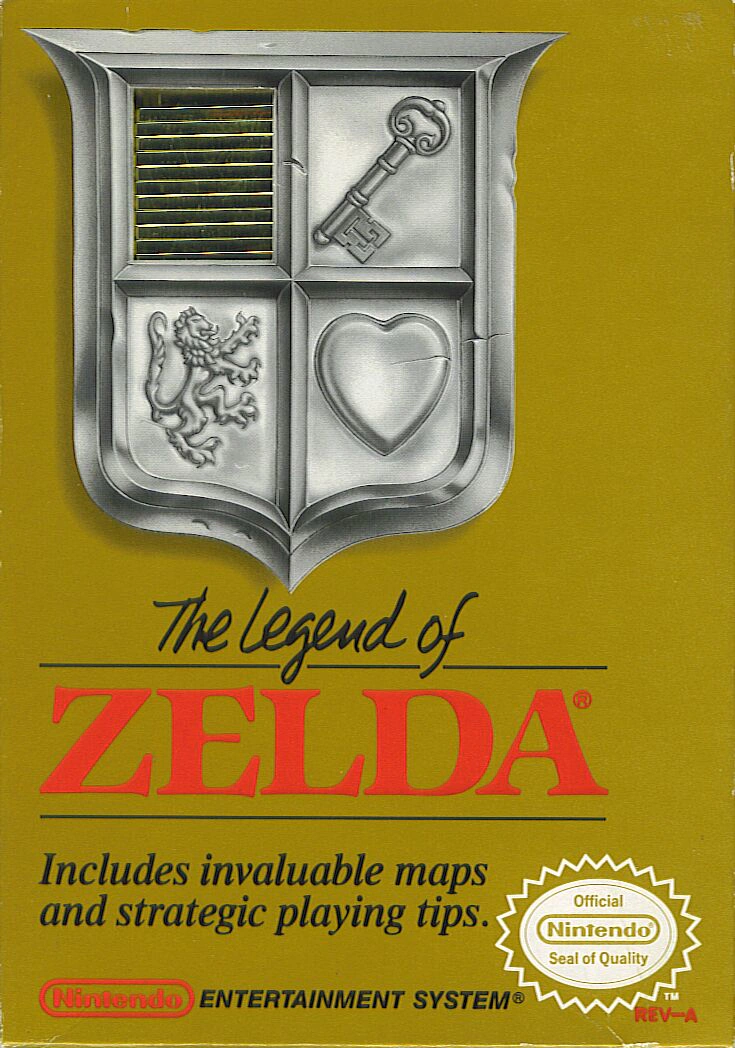
Although The Legend of Zelda series remains as one of the most critically acclaimed video game franchises by Nintendo and is highly influential in the action-adventure genre since the release of The Legend of Zelda in 1986, like most of its other well-known series (Mario, Pokémon, etc.), there have been some instances when a game, in one or another way, motivated scandals in media, as well as within the massive Zelda fanbase. Some reasons for this might include religious or content issues, radical changes that concern longtime fans, opinions during interviews by the main developers, and unsolved debates among the fandom.

Religious Content and Censorship
The Book of Magic in the original The Legend of Zelda used to add Fire for the Magical Rod is known as the Bible in the Japanese version (which heavily suggests the fire from the item is in fact Holy Fire). Despite this, the Christian cross on the book, as well as Link's Wooden and Magical Shield were left intact in the international release. In Four Swords Adventures, however, it is completely removed.
The Legend of Zelda's First Quest dungeons have their nine levels designed to be shaped like a simple object or creature (such as a crescent moon or lizard), making it easier for the casual gamer to navigate. Level-3, on the other hand, has a controversial map design that has some players in the Western world believe that it is based on the infamous Nazi Swastika symbol, facing left. However, it is actually the Manji, a Buddhist symbol of good fortune, and such is prominent in Asian cultures including Japan. The Nazi Party simply stole the design and mirrored it in order to create the Swastika. Although it only received surprisingly minor attention during initial release, because of the notoriety about the symbol in some parts of the world, any depictions of the Manji are never used again in the franchise (or other major works) by Nintendo.
A Link to the Past is technically known in the original Japanese version as The Legend of Zelda: Triforce of the Gods (Zeruda no Densetsu: Kamigami no Toraifosu). During the Super NES era, Nintendo of America had an active policy against real-life religious references in video games (though the first two Zelda titles on NES had some anyway), so the title of the game was changed to A Link to the Past for the international release. The game also showed Egyptian characters on the inscriptions to be translated by the Book of Mudora for the ancient Mudora language, but were changed to smaller random symbols when the game was exported overseas, as well as Eastern Palace having a tile in one room closely resembling the Star of David, a symbol prominent to the Jewish and Judaism communities and the national flag of Israel, to a generic one. There is even an artwork of Link praying to a crucifix in the Sanctuary, which is referred to as a church in the Japanese version.
In the Japanese and original German and French versions of Link's Awakening, the Hippo Model in Animal Village was nude. She has a towel covering the lower half of her body, and what appears to be exposed breasts on her upper body. When Link walks in, she quickly pulls her towel up and covers herself. Nintendo of America deemed this too inappropriate for American audiences, and as a result, removed her breasts and towel, leaving a plain stomach. This censorship was also carried over in the German and French versions of Link's Awakening DX. A similar case has also occurred for the Mermaid, as her missing Necklace was originally her bikini top.
Ocarina of Time, in the original Nintendo 64 version, had two major religious references: The Fire Temple's music sampled a group of men chanting an Islamic call-to-prayer. This stock sound effect was removed from later versions of the game by Nintendo because of the religious association. The name of 'Allah' can clearly be heard at one point, with the chant "Allah is most great" spoken several times. Another Arabic phrase that was translated was "I bear witness that there is no god but Allah". Some also took issue with the fact that the call-to-prayer was used as a component to music; during a call, all controllable sources of music or loud sound must be silenced, and not doing so is considered ignoring the call. The stock chanting was replaced by a MIDI sample of a choir similar to the Shadow Temple in later releases, ports, and remakes. Many fans believed the change was due to a public outcry, but it was actually due to Nintendo accidentally violating their own policy about religious content and Koji Kondo was not aware of the reference when composing the dungeon's theme song. Strangely, this Islamic chant was used in another Nintendo game known as Cruis'n World without issue.
The second religious reference in Ocarina of Time was the Crest of the Gerudo, which was far more widespread as it appeared as a motif on several elements through the game, including blocks, switches, and the Mirror Shield. This symbol itself was similar, but not identical, to the Star and crescent symbol that is prominent in the Islam, the Muslim community in general, and several national flags in Asia. Some of the differences between the two symbols include: The Islamic version has a 5-point star, while the Gerudo version has 4 points; the Islamic crescent faces to the right, and is not as "complete" or "closed" as the Gerudo one, which faces to the left; and many Islamic crescents have the star deeper in it, not at the edge like the Gerudo version does. In any case, due to the religious meaning of the symbol, Nintendo edited it out in all of its spots in later versions of the game, with a single exception. The newer Gerudo symbol used since Majora's Mask has been a staple in modern revisions and ports of Ocarina of Time, including its remake.

Another notorious Ocarina of Time issue is it features genuine blood, which is most prominent on Ganon. In the original v.1.0/v1.1 NTSC release, after his apparent defeat at the top of his lair as his human form Ganondorf, the archvillain coughs up red blood. When Link truly defeats him during the Final Boss battle as his actual demon form, the Hero of Time shoves the Master Sword directly into his throat after aggressively hitting his face three times (but somehow didn't kill the beast) with blood drops flying upon every strike, which, although arguably considered the most climactic victory for the main protagonist, had left a shocking impact on many fans to this day due to the rather high level of violence for the franchise's standards. Bubbles of blood can also be seen when Spikes and Shell Blades are defeated underwater. In the v.1.2 and PAL versions, the shade of color for the blood was changed to green and in Ocarina of Time 3D as well as its manga adaptation, the Blade's of Evil's Bane instead hits Ganon's forehead (much like some later games' final blows) to tone down the violence. However, stained red blood is still seen in Bottom of the Well and Shadow Temple in all N64 revisions and even the 3DS remake. Strangely, the blood and vicious stab by Link does not affect the original version's Everyone ("E") rating by the ESRB, while Ocarina of Time 3D's censorship has it with Everyone 10+ ("E10+"), which is highly unusual, as most video games showing realistic colored blood normally requires at least a Teen ("T") rating. In any case, all other games in The Legend of Zelda series, or titles directly made by Nintendo in general, excluding Shell Blades in Majora's Mask (which strangely remain red), never feature blood during gameplay or cutscenes - and even if so as a shade of green or blue it is kept to bare minimum, as the company itself has a strict policy against graphic violence in their games even with franchises that seemingly encourage it like Zelda or Metroid (though a few exceptions exist with ones developed by other companies but published by Nintendo, such as Kirby's Dream Land 3 or Killer Instinct). Ironically enough, because of the fact the initial version of Ocarina of Time indeed depicted true blood, not unlike the aforementioned Islamic references, it has been considered unique and therefore a collector's item among fans of this installment since.
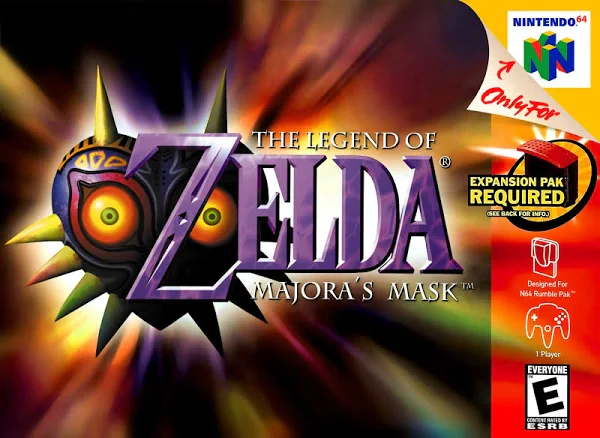
The Skull Kids seen in Ocarina of Time originally had black skin and thick orange lips. In the game's sequel as well as the Nintendo 3DS remakes, the character's face has been changed into a wooden texture and his mouth is now a beak (although the Japanese version of Majora's Mask retained the original skin). This was because of an existing controversial stereotype commonly seen in the 19th and 20th centuries where someone uses burnt cork or theatrical makeup to portray a caricature among African American people known as blackface. It was changed by Nintendo to prevent a public outcry of racism. The company faced a similar issue in the Pokémon franchise around the same time with the original Red/Blue era Ice-type Pokémon Jynx, where its black skin was later changed to purple but its thick pink lips were left intact.
An often overlooked element of Ocarina of Time existed in the N64 version's French translation. There, the Carpet Merchant had a name, Sabib al Mamoud, and he spoke French with a heavy Arabic accent, making several grammatical errors. The translation of Ocarina of Time 3D ommitted the name, referring to him only by his title, and he speaks standard French to avoid being interpreted as a crude caricature of an Arab.
Once more in Ocarina of Time, Princess Ruto originally had exposed breasts. Although this received only a small amount of attention during release, her original artwork and in-game model, especially as an adult, explicitly has them visible in all regional versions, as she is actually nude. In Ocarina of Time 3D and other modern appearances such as Hyrule Warriors, she was slightly redesigned so her fins cover them up and drape past her waist, resembling a dress, to prevent controversy.
Controversial Changes within Newer Entries
The Adventure of Link, being the second installment in the Zelda series, was expected to retain the core elements of its predecessor, while still adding new ones. Instead, the game changed the gameplay completely, using elements of RPG and platform games, such as experience, jumps, life system, etc., similar in akin to the Castlevania series. For these reasons, alongside having a rather high difficulty level, the game is regarded as the black sheep of the series, and has remained one of the most polarizing and divisive entries so far.
Before The Wind Waker was revealed, it was believed that the game's visual style would be similar, or even superior, to the SpaceWorld 2000 GameCube Tech Demo that showed a brief fight between Link and Ganondorf in a dark chamber inside what appears to be a castle, if not Ganon's Castle (with their models resembling what would become for Super Smash Bros. Melee). However, the demo based on the then-upcoming Nintendo GameCube was never meant to showcase an actual game, and The Wind Waker was instead conceived with cel-shading graphics. The fan reaction was heavily mixed and, prior to the game's release and eventual critical acclaim, it was said that it would tarnish the series' reputation, especially in Japan (even the series' creator Shigeru Miyamoto disliked the art style). In spite of this, however, some fans are still divided about the graphics that would appear in some later games such as The Minish Cap and Tri Force Heroes.
Twilight Princess received some backlash among fans of the Nintendo 64 games Ocarina of Time and Majora's Mask, when it was revealed in Hyrule Historia that the Hero's Spirit, a golden wolf turned mysterious specter who teaches Link the seven Hidden Skills in order to pass on his lost expert knowledge of the art of the sword, is not just a mere undead knight, but actually the restless soul of the Hero of Time, making it the first time two different incarnations of the main protagonist meet in canon content. Because it has never been revealed what happened to the rather iconic incarnation of Link after the events of the latter game by Nintendo, the cause has been utterly left vague, and was met with confusion, with some believing the Hero of Time may have died as a Hylian Knight himself during a particularly intense war in Hyrule (the book does suggest he is actually one) or became a real Stalfos while searching for Navi in the Lost Woods. As for other Links meeting each other, this would occur again in Breath of the Wild where the Hero of the Wild can summon the Link from Twilight Princess (ironically) in wolf form to aid him in his quest via an Amiibo (Rune).
Spirit Tracks was first revealed during the Game Developer's Conference in March 2009. When it was revealed that the game would evolve around train transportation, there were fan concerns about the seemingly high rate of technological advances in Hyrule, despite them taking place as early as in Link's Awakening. Another concern was related to the restrictive nature of exploring the overworld with a train, compared to navigating through it on foot or with a more traditional means of transportation.
Breath of the Wild has received controversy around the art style of the game shown at E3 2014 as it differed from the Zelda HD Experience tech demo shown at E3 2011. Unlike The Wind Waker, the backlash was nowhere near as large as it was when the art style from The Wind Waker contrasted SpaceWorld 2000 GameCube Tech Demo. For the most part fans were pleased with the art style, but a fair amount were disappointed. Similar to Spirit Tracks, controversy surrounding The L egend of Zelda 's setting and genre changing arose. At E3 2014, an octopus-like machine was firing beams at Link, while he used a seemingly high tech bow and arrow to defend himself. This left some fans wondering if the genre of the series would still remain medieval fantasy. Eiji Aonuma confirmed that "Zelda Wii U" will not be more futuristic than previous games.
Despite Mario Kart 8 of the Super Mario franchise's Mario Kart spin-off series not being related to The Legend of Zelda series, Eiji Aonuma stated that he had interest in seeing the Master Cycle (based on a motorcycle) in core Zelda games. Fans interpreted this as Aonuma foreseeing future Zelda games becoming high tech or steampunk. Some in the community welcomed the idea, while others were unhappy because they wanted the series to remain a medieval fantasy. At the request of Aonuma, Breath of the Wild ultimately featured the Master Cycle Zero where Link can ride across the overworld at high speeds. However, other developers on the team even opposed the idea of Link being able to drive a vehicle within Hyrule, saying "No! You can't do that. That's crazy".

Developer Comments and Demonstrations
In a 2009 conference in Spain, series director Eiji Aonuma had commented that Ocarina of Time had not aged very well, claiming that it had a slower presentation and outdated graphics, and that the subsequent games in the series were technically superior. This caused significant controversy among longtime fans of the series, who started arguing whether or not he was right. This was compounded by the fact that, in a previous 2008 interview with Nintendo Power, he had stated that he would keep working on the series until surpassing the aforementioned game on the Nintendo 64, which some claiming this won't be very easy, given its groundbreaking success, revolutionary impact, and even considered the greatest game ever made in spite of its age.
When Skyward Sword was revealed in E3 2010, series creator Shigeru Miyamoto made a public demonstration of it during the conference. However, due to wireless interference, the controls did not respond very well, making Miyamoto realize unintended commands in the game. Though the journalists later managed to play the game better on the demo floor, the previous incident had arisen concerns regarding the effectiveness of using motion controls to play the game to the point that some fans asked for traditional controls instead, which has affected the expectations since.
Sheik's Gender
Due to the character's masculine appearance in Ocarina of Time, as well as Princess Ruto referring to "him" as a male person, it was thought by fans that Princess Zelda had undergone a gender change while hiding from Ganondorf during the seven-year skip, therefore making herself appearing to be transgender. Super Smash Bros. Melee and Super Smash Bros. Brawl referred to the character as female (despite these games not being considered canon in the first place), Ocarina of Time 3D provided Sheik with a more feminine body, and according to Nintendo in 2014, they responded with "The definitive answer is that Sheik is a woman - simply Zelda in a different outfit." However, most sources claim Sheik as male and through ROM hacking in Ocarina of Time to reveal the character's face entirely, Sheik clearly appears masculine. Due to these issues, fans still debate over the character being male or female.

Voice Acting
Excluding non-canon media such as animated TV series, after Twilight Princess was revealed without full character speech, fans began debating whether or not future games should include voice acting. Detractors often cite the Philips CD-i games as a reason not to feature this element in the games, whereas others point out that the varying dialogue options for Link in games such as Skyward Sword give him several established personalities for the player to choose from, rather than him being a blank slate onto which the player can entirely project themselves. Breath of the Wild is the first in the series to feature significant voice acting, though Link himself still does not speak.
Zelda Timeline
When Hyrule Historia was released in 2011, during the 25th anniversary of the franchise, due to Eiji Aonuma confirming the existence of multiple timeline branching from Ocarina of Time as well as various incarnations of Link, Princess Zelda, and even Ganon throughout all games, although it is generally accepted by fans, it was met with controversy, as some claim the chronological placement of the plots are confusing or complete nonsense, especially since older titles before The Wind Waker have no clear evidence of different versions of the main characters in their storylines or connected events to future titles (as classic games in the NES to N64 eras according to the developers at the time were originally intended to be a single Link/Zelda at certain parts of their lives). Even before its establishment, there were several retcons, further increasing the debate.
Series Difficulty
Since the release of the three-dimensional installments beginning with Ocarina of Time, The Legend of Zelda series has been noted by players for having a notable drop in overall difficulty, whether it is from the level of challenge by enemies/bosses, general damage Link takes from foes or hazards, the simplicity of certain dungeons, items, or even the story, causing an issue among the fanbase into believing the franchise has become too easy, with the least hardest games often claimed to be The Wind Waker, A Link Between Worlds, Spirit Tracks, Four Swords, and sometimes Twilight Princess or Skyward Sword. This has led others to call those who played the 2D titles like The Adventure of Link, A Link to the Past or Oracle of Seasons, optional modes known to make Link's adventure harder such as The Legend of Zelda 's Second Quest and Ocarina of Time 3D 's Master Quest, or extreme challenges such as the Three Heart Challenge, "no damage", or speedruns to be "true Zelda players". However, some have argued The Legend of Zelda was not intended to be highly challenging like other medieval fantasy-based series such as Dark Souls or Elden Ring according to Nintendo, as the company focuses on making their games playable for younger fans and/or casual gamers. The debate is mainly the result of due to the longevity and popularity the Zelda franchise itself, like most other older Nintendo series (Mario, Metroid, Kirby, Pokémon, etc), many gameplay videos (usually, but not always 100% completion playthroughs or boss battle runs) of most installments on social media are often performed by expert veterans rather than inexperienced players, making otherwise tough obstacles appear nearly effortless (such players at times do actions in-game that are frowned upon by other fans such as using "overpowered" weapons constantly, or, in the case of early 3D games where the damage output was twice the regular sword strike's, performing Spin or especially Jump Attacks repetitively). Like the aforementioned franchises, fans have also created unofficial ROM hacks of Zelda titles (often older) to make them difficult even for seasoned players. Modern installments of the series, however, continue to feature considerable challenges that require players to take careful strategies to overcome high-level puzzles and bosses.
Link's Love Interest
Throughout the long-running franchise, it comes to no surprise that Link, due to his heroic actions and handsome appearance, usually but not always has a somewhat romantic interest with Princess Zelda in the main games or other media as early as The Adventure of Link (similar to Mario with Princess Peach in the Mario series). However, some games have featured multiple different female characters taking fondness to the main protagonist alongside the Hyrule princess such as Midna, Peatrice, Mipha, and so on. This is especially true in Ocarina of Time, as the Hero of Time had as many as six - Zelda, Saria, Princess Ruto, Malon, and possibly Nabooru and Navi, resulting Link as a whole being widely considered a ladies' man or in a love triangle (though ironically, Link himself rarely returns the favor even with Zelda, as his relationships with females in the mainline series often appears unintentional due to Nintendo's focus of strictly keeping him a gender-neutral figure). For the game itself, the reason for those key characters' higher than usual interest at Link was that this title, according to the developers, was originally intended to have elements of a dating sim game - which are shockingly popular in Japan - but was scrapped late in development due to them realizing that most of his dating choices would become entirely unavailable at the end of the story, which indeed occurred in-game by all but Malon becoming Sages and the Hero of Time himself being sent into the Child Timeline by Princess Zelda while Navi leaves him afterwards, ultimately separating them.

Ruto in particular has sparked controversy among many who played the Nintendo 64 installments and their remakes, as when the initially feisty Zora princess was rescued by Link, she nearly kisses him and gives the Zora's Sapphire, telling the hero he is her future husband. This is because that specific Spiritual Stone is actually an engagement ring among the Zora race and the two characters were still children. The fan reaction about the idea of a Hylian - let alone Link himself, being in a canonical romantic relationship with an aquatic figure is heavily mixed on-par with The Wind Waker 's cel-shaded graphics (plus Princess Ruto herself is generally disliked among the Zelda community like Navi), although some in recent years do enjoy this lore and wished them to be truly together. Strangely, Saria, who is a Kokiri, do not age into an adult while Link himself does, and their own relationship could cause a possible controversy of hebephilia, hasn't received much negative attention by the Zelda community. Another argument for the Hero of Time's interests is there is a misconception by fans about Malon being an ancestor of the Link of Twilight Princess and therefore the former's actual love, as this incarnation was possibly a Knight of Hyrule according to Hyrule Historia and Malon herself wishes to meet such a knight as explained by a Gossip Stone, while the Hero of Twilight was initially a rancher and knows Epona's Song, but this is never confirmed by Nintendo. Despite only Princess Zelda had ever kissed Link in the main games (the linked Oracle game and possibly The Adventure of Link), fans today continue to debate which NPC female character of the series is the main protagonist's true love, which is often reflected through unofficial ships on social media.
Ganon's true form
Despite the main antagonist's debut in the original The Legend of Zelda depicting himself as a boar-like monster resembling a Moblin, there has been an argument by fans about which of Ganon's two traditional forms - as a Demon, or a Gerudo (Ganondorf) - is his actual form. While it is generally accepted as the former, since the release of A Link to the Past and especially Ocarina of Time where in the latter he makes his first physical appearance, Ganondorf Dragmire, the king of the Gerudo thieves, has become the character's standard form in modern media, and was explained by certain other characters in those games (Maidans, Nabooru, etc.) to have originally born as a human rather than a beast before stealing the Triforce to become Ganon (making himself less of a parallel to Bowser from the Mario series who was truly born as a Koopa), which he can transform into with the Triforce of Power in most cases within the franchise or other media (though in the Super NES game he has a different alter-ego, Agahnim) as a "power up". This is further supported in that Demise in Skyward Sword according to Hyrule Historia, was also humanoid, and Ganon being the endless reincarnation of his hatred if not that villain himself, destined to eliminate Link and Princess Zelda (who possess the spirit of the Legendary Hero and the blood of goddess Hylia, respectively). Some fans also considered Ganondorf as a separate entity from Ganon (primarily due to spin-offs like Super Smash Bros. and Hyrule Warriors), though they are, in fact, the same character. In the core series games, however, Ganondorf is often referred to as Evil King or Demon King, which is Ganon's title, or sometimes 'Ganon' as a nickname, and is nothing more than an alter-ego. Aside from the aforementioned debut as such, Ganon is more often the Final Boss in games he as the Dark Beast appears in, is technically more powerful in comparision, and therefore it is likely the demonic monster is indeed the genuine form of the series' central villain. Nintendo, though, has not completely solved this debate, so fans continue to argue.

Triforce's Association as a Trinity
Since its depiction in Ocarina of Time, the ultimate source of power in the series created by the Golden Goddesses, the Triforce, due to its omnipotent ability and the shape of the golden symbol through three sacred triangles, have some fans believe that it is based on the Holy Trinity from Christianity beliefs. The Triforce of Power, Wisdom, and Courage each are positioned identically to that of the respective Father, Son, and the Holy Spirit - each being God, and are part of the same divine source like that of the Trinity itself. However, it is likely the similarity between the Triforce and the Holy Trinity are merely a coincidence and wasn't intended to be religious by Nintendo, as according to Shigeru Miyamoto, during the development of The Legend of Zelda, the Triforce's fragments were originally planned to be electronic chips as the in-game setting was going to be set in the past and future before it was scrapped, and the symbol of the relic itself was actually inspired by the Hōjō clan, a Japanese samurai family who took over Japan during the 13th century and their own emblem was historically identical. In addition, the Golden Goddesses which the Triforce contain their essence are three gods, not one.
Master Sword being the ultimate weapon
Since its first appearance in 1991 for A Link to the Past on the Super Nintendo Entertainment System, the Master Sword became famously known as Link's trademark weapon and is one of, if not the most iconic Sword in The Legend of Zelda series and video game media in general, and bares a similarity to the mythical Excalibur sword in British legends. Due to its great popularity and importance to the franchise itself as it is often required for Link to obtain it from its pedestal in order to defeat his archnemesis, Ganon, because it possesses the Power to Repel Evil (which most other swords lack), enabling the blade to vanquish evil beings, many fans have believed the Master Sword to be the overall strongest sword or weapons altogether, especially since in three games - A Link to the Past, A Link Between Worlds, and the Japan-only Satellaview title BS Ancient Stone Tablets it can be upgraded to become the Master Sword Lv2 or Lv3 to inflict major damage against enemies. However, although the standard Master Sword itself is powerful in its own right story-wise, as it does indeed possess the blessed powers of the Golden Goddesses and was originally created by Hylia as the Goddess Sword alongside its spirit Fi in Skyward Sword 's backstory to assist the Legendary Hero (and eventually destroy Demise when Link defeated the Demon King in-game as the True Master Sword), some have argued the Blade of Evil's Bane was never actually the mightiest sword in existence within the Zelda universe, as most main installments of the series contradicts this in gameplay; Certain weapons such as the Biggoron's Sword, Light Arrows, and Silver Arrows outclass it in damage output, and in Tears of The Kingdom, even broke apart when Ganondorf shattered the blade with his deadly Gloom attack when Link attempted to protect Princess Zelda, forcing it to be reforged later. In addition, although Ganondorf had perished by the Master Sword in The Wind Waker, Twilight Princess, and Tears of the Kingdom, no game yet in the series has the sacred blade kill his beast form unlike the Silver Arrows. Because of the different story and gameplay perspectives of the Master Sword, it remains an issue among fans about whether the Master Sword is canonically the most powerful weapon in the series.
Strongest Link
Similarly to the Master Sword, in the present time, The Legend of Zelda series community has been filled with harsh debates about which specific incarnation of the franchise's main protagonist is the most powerful, based on certain items, events of the games and even the character himself. While it is generally accepted by fans to be the Hero of Time - the Link from Ocarina of Time/Majora's Mask, due to his iconic feats and having the infamous Fierce Deity's Mask, others believe it to be the Hero of Legend (A Link to the Past/Link's Awakening), Hero of Twilight (Twilight Princess), Hero of the Wild (Breath of the Wild/Tears of the Kingdom), or the Hero of the Sky (Skyward Sword), more often the former. In the case of the Link from the SNES title, although he has powerful items in his own right, due to a large misconception of Ganon completely possessing the power the full Triforce in the Final Boss battle (although it is revealed in-game, the instruction manual, and even the official strategy guide that he does not) as well as potentially wielding the optional Golden Sword, this had led to confusion and debates. A similar issue is found with the aforementioned two with the Hero of the Wild's special moves such as the Flurry Rush, his title as Champion, and defeating Ganon twice (something a few other Links already did), while the Hero of the Sky is confirmed to be the Legendary Hero himself according to Hyrule Historia, used the full Triforce at one point in Skyward Sword 's storyline, and defeating Demise. The Hero of Twilight incarnation aside from noticeable physical fitness is known to perform powerful attacks such as the Hidden Skills and defeating Ganondorf with the Ending Blow, although these seven special moves are technically by the Hero of Time - taught to his descendant in his Hero's Spirit form. As there is no direct answer by Nintendo to solve this debate, fans continue to argue which games' Link is the strongest.

The opposite also occurs for the weakest Link, in which players mostly believe it to be the Hero of Winds (The Wind Waker/Phantom Hourglass) and the hero from Spirit Tracks due to those incarnations not being chosen by the Golden Goddesses in the first place and in the case of the former, was easily beaten down twice by a weakened Ganondorf, and only defeated him via a wish by Daphnes Nohansen Hyrule with the completed Triforce and assistance of Tetra as Princess Zelda.
Ocarina of Time is the Greatest Game of All Time
Since its release, Ocarina of Time is widely considered by the public to be not only the greatest The Legend of Zelda series title, but also the greatest video game in general, to this day, due to its unrivaled impact on the industry as a whole. However, being one of the older titles of the long-running franchise - as only the fifth installment for the Nintendo 64 in 1998 and the first in 3D, some fans, especially ones who enjoyed the modern titles, are rather divided about its position today, as when compared to later three-dimensional games (most of which reused its formula), in spite of its iconic story, praised music by Koji Kondo, and overall balance, the then-groundbreaking gameplay and graphics of Ocarina of Time appears obsolete, even in its Nintendo 3DS remake released in 2011, and its great success possibly overshadowed the potential of future games until Breath of the Wild, causing them to claim this title to be overrated, which is supported by Eiji Anouma, the series' current director. Other critically acclaimed games in the franchise frequently debated by fans as the best Zelda game include A Link to the Past, Majora's Mask, The Wind Waker, Twilight Princess, Skyward Sword, Breath of the Wild, and Tears of the Kingdom, with the latter two ranking higher in modern ranking publications such as IGN. Outside the Zelda series, a few high-ranking examples rivaling Ocarina of Time's status exist such as Grand Theft Auto V, GoldenEye 007, Red Dead Redemption 2, Nintendo's own Super Mario 64, Super Mario Galaxy, Metroid Prime and so forth. Although it was the best-selling Zelda game for nearly two decades with 7.6 million copies sold - beating the previous record of The Legend of Zelda 's 6.5 million, Ocarina of Time wasn't the best-selling title of the 32-bit era as Super Mario 64 sold 11.62 million and is currently far surpassed by Breath of the Wild at 35.3 million, while the highest seller overall is debated between Tetris or Minecraft, which sold a whopping 520 and 350 million, respectively (it should be noted, however, that the modern Zelda installment was a launch title for the Nintendo Switch and also released for the Wii U, and the latter two are games available in many platforms).

Despite this, however, in the cases of the aforementioned The Legend of Zelda titles (or most Nintendo games in general), many often expressed their preferred favorites based solely on nostalgia, the characters, the Final Boss battle and ending credits, and rarely how well the title itself was made altogether or their own level of impact, which is a notoriously common issue in the present era of the Internet (as some on social media, especially YouTube or Twitch, immediately spoil information the moment a popular upcoming game is released, if not illegally leaking data to the public prior). As of 2026, Ocarina of Time remains the highest ranking game on Metacritic with a score of 99/100, while others close to its position in most official publications are generally games released in the mid-2000s to early 2020s, therefore indicating some aspects of the classic N64 title continued to age well.

Sources
Adapted from the original article, under GFDL 1.3.