
Lore
Enemy
Recurring mechanic in The Legend of Zelda series
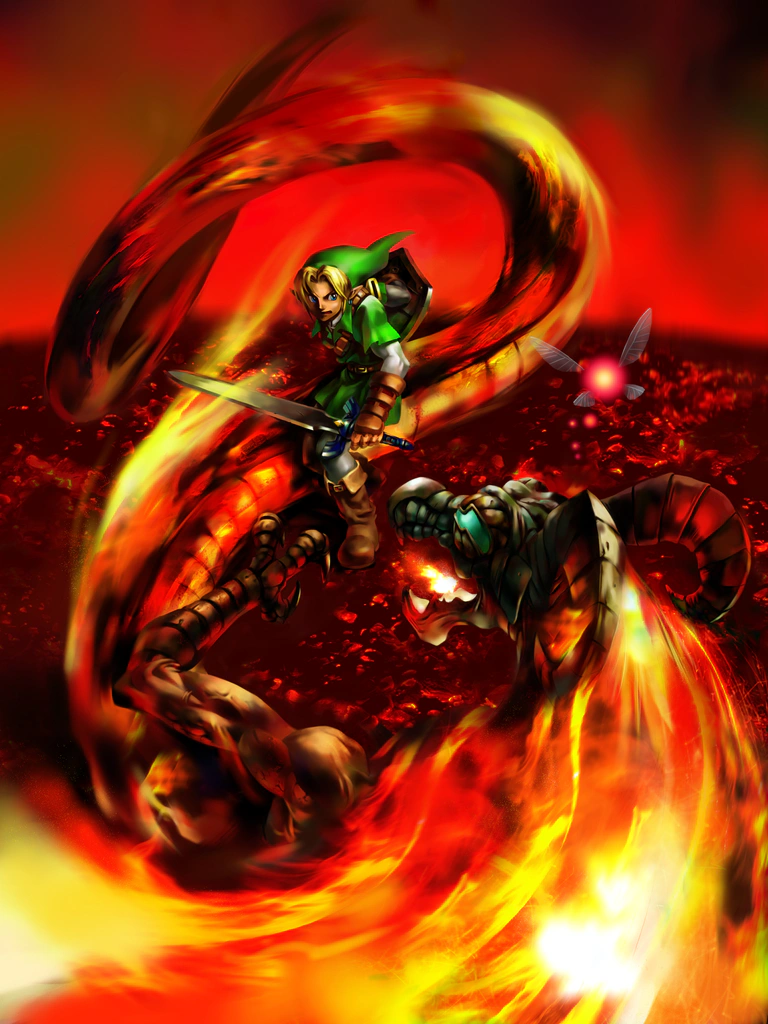
Enemy, also known as Monsters, are a recurring mechanic in The Legend of Zelda series.
Characteristics
In most video games, enemies are minor antagonists that pose a threat to the player character and attempt to harm and defeat them in order to stop the player itself from completing their primary objective (which can lead to a Game Over if successful), whether it is a hostile human or creature. Therefore, as they frequently appear, usually in groups, the protagonist must avoid or eliminate them in order to progress through stages safely. They are most often simply minions of the main antagonist and are generally basic in terms of how dangerous they are based on attacks or their appearance. However, some are stronger or more aggressive than others, and the most advanced are large stoic guardians, serving as Mini-Bosses or Bosses. Although the Final Boss is also technically an enemy and normally the strongest of this type of mechanic, these are separate from lesser opponents in the plot, as they are almost always the main villain of the game.

In The Legend of Zelda series, enemies are generally evil monsters created by Ganon or other lead antagonists through shadow magic and are sent by them to take down Link or other playable characters, alongside causing havoc to the world, coming in great numbers. They are also in many different shapes and sizes. Therefore, these foes are the "grunt" force of the villain of each installment. Some of the most commonly known enemies include Moblins, Stalfos, Octoroks, Keese, Armos, Bokoblins, Poes, and more. They are generally found in Dungeons, but also often appear in the Overworld as well. At times, enemies can also serve as a puzzle for Link to accomplish. Although most enemies attack Link on sight, the most basic ones simply wonder around areas or move very slowly, making them easy targets for the young hero and an opportunity for beginners (or rarely, veterans playing a new game for the first time) to practice. In the 2D games, Link can also take damage by simply coming into contact with them (which is especially dangerous against stronger foes). Late in the quest of most Zelda games, especially early installments, a previously encountered Sub-Boss and occasionally even actual bosses can later appear as regular enemies, as they no longer guard a specific objective and Link often has new tools to make him defeat such foes more easily.

Fitting the medieval-like setting and hack and slash-style gameplay, most enemies in the franchise can easily be slain by Swords as the primary method of disposal, but some may require different items and even the Shield. When defeated, they often vanish into a puff of smoke (or flames in the Nintendo 64 games) and Link is sometimes rewarded with Recovery Hearts, Magic Jars, Rupees, ammunition (Arrows, Bombs, etc.), or rarely, Fairies. In the 3D games, targeting enemies is beneficial for defeating individual opponents more easily, specifically when using certain items such as the Bow or Boomerang or performing special sword techniques like the Spin Attack. Though upgrades of weapons or defense as well as healing items such as Potions are not as necessarily needed for standard enemies in comparison to bosses as they are generally weak (often inflicting a quarter or half a Heart), some in certain installments such as The Adventure of Link or A Link to the Past can inflict major damage onto Link or withstand quite a few hits from basic attacks, especially late in his adventure. In optional, more difficult modes such as Second Quest, Master Quest, or Hero Mode, such important abilities become mandatory, as stronger adversaries more frequently appear and/or damage by them is increased, giving a greater challenge for experienced players.
In three-dimensional installments since Ocarina of Time, whenever Link is near an enemy, a battle theme begins to play in the background music, which will last until he moves a certain distance away or if the enemy itself is defeated. This can prove useful for a player having difficulties searching for hidden foes inside dark dungeons or areas, or awaiting an ambush.
Unlike some other action-adventure series games, although all vulnerable enemies in The Legend of Zelda have a certain amount of hit points, they do not have their own health displayed to the player in combat, meaning only Link's is visible. This is done so that they do not explicitly know how many blows are still needed to be delivered, which in turn makes the gameplay experience less predictable, especially against bosses. However, there a few exceptions; In The Wind Waker, when equipped with the Hero's Charm, a health bar can be seen when targeted, and Breath of the Wild, Tears of the Kingdom, as well as Hyrule Warriors, have them fully shown.

Interestingly, enemies from different Nintendo franchises, mainly Super Mario, make appearances in a few games to fight against the hero as well, such as Goombas, Piranha Plants, Thwomps, Shy Guys, and even Kirby (despite this particular enemy is not the actual character, who is a central protagonist like Link), as primarily showcased in Link's Awakening.
Some Animals, although not technically enemies, can attack or even defeat Link when provoked, such as Mutts, Pigs, and most infamously, Cuccos.
Much like the Mario series, many enemies of The Legend of Zelda are noted by fans for having rather strange names given the appearance of certain species such as Keese (bat), Rope (snake), Ghini/Poe (ghost), Pols Voice (rabbit), ReDead (zombie), Tektike (crab/spider), Wallmaster (undead hand), Gibdo (mummy), or the tube Shield-consuming Like Like.
The Minish Cap
Enemy appear both in the Overworld and inside Dungeon in The Minish Cap. Many of the Enemy from Four Swords reappear in The Minish Cap, though some of their appearances have been altered.
Enemy do not appear at all in the game until Vaati opens the Bound Chest at the Picori Festival, releasing monsters into Hyrule. After Vaati is defeated by Link at Dark Hyrule Castle and Princess Zelda uses the Mage's Cap to undo the damage he caused to Hyrule, all the Enemy disappear from across the land.
Breath of the Wild
In Breath of the Wild, Monster is the name given to the category of most animals who harm and are hostile towards Link. Most types of Monster have different variants that differ in strength or attacks.
Color variants consist of the basic Monster and then blue, black, and silver variants of that Monster, each with an increase in attack strength and health. While playing in Master Mode, a fifth color variant is added, gold Monster, which are even stronger than silver Monster. When just starting the game, the Monster encountered would consist mainly of basic Monster with occasional blue-variant Monster; a hidden tally of the Monster defeated is kept by the game, and when certain milestones are hit, the Monster scale-up to stronger color variants. For example, Link would encounter regular Bokoblin and occasional Blue Bokoblin when just barely awakening from the Shrine of Resurrection, but by the time he frees a Divine Beast, he is most-likely encountering Blue Bokoblin more often and is now encountering new Black Bokoblin.
On top of color variants, elemental variants separate different Monster by elemental abilities; the three elemental variants include Fire, Ice, and Electricity. Fire and Ice are the opposites of each other, and hitting a Fire-type Monster with an Ice-type Weapon (or vice-versa) will instantly kill the Monster. For example, hitting an Ice Wizzrobe with a Flamespear will instantly kill the Monster.
Furthermore, many Monster also have a skeletal variant that randomly appears at night to attack Link called stal monsters. These include Stalkoblin, Stalizalfos, Stalmoblin, and Stalnox. Their bodies are counted as a separate entity from their skull, with the latter bearing the Monster's health bar. Generally speaking, skeletal Monster only drop first and second tier Monster Part and drop an arm in addition to their held Weapon upon death.
Bosses
In addition to regular Monster, bosses can be encountered anywhere throughout Hyrule at any time. Bosses that can be encountered in Hyrule include Stone Talus, Hinox, and Molduga. Two elemental variants of Stone Talus, Frost Talus and Igneo Talus, reside in very cold and very hot climates, respectively. Stone Talus and all the color variants of Hinox can be found in the grassy plains that take up most of the Hyrule. Unlike the other two bosses, Molduga can only be found in the Gerudo Desert.
The rest of the Monster that make up the Boss category are encountered in one-time only battles; Fireblight Ganon, Thunderblight Ganon, Waterblight Ganon, Windblight Ganon, and Monk Maz Koshia are fought in each Divine Beast, Master Kohga is fought in the Yiga Clan Hideout, and Calamity Ganon is fought in Hyrule Castle.
Monster Part
All Monster drop Monster Part when defeated, which are a class of Material. Monster Part are grouped into three tiers, with the higher tiers only being dropped by Monster in higher color variant tiers. (i.e. Bokoblin Horn, a first-tier Monster Part, can be dropped by any Bokoblin, but Bokoblin Guts, a third-tier Monster Part, can only be dropped by Blue Bokoblin or higher.) Monster Part can be used to create Elixir, upgrade Armor with a Great Fairy, or sold for Rupee. They can also be sold as the only way to obtain Mon, the currency that Kilton uses in his shop, Fang and Bone.
Echoes of Wisdom
After defeating a non-boss enemy in combat, Princess Zelda can summon them as echoes to fight for her.
The Wand of Gamelon
BS The Legend of Zelda
Sources
Adapted from the original article, under GFDL 1.3.