
Work
The Legend of Zelda: A Link to the Past
The Legend of Zelda: A Link to the Past is the third main installment of The…
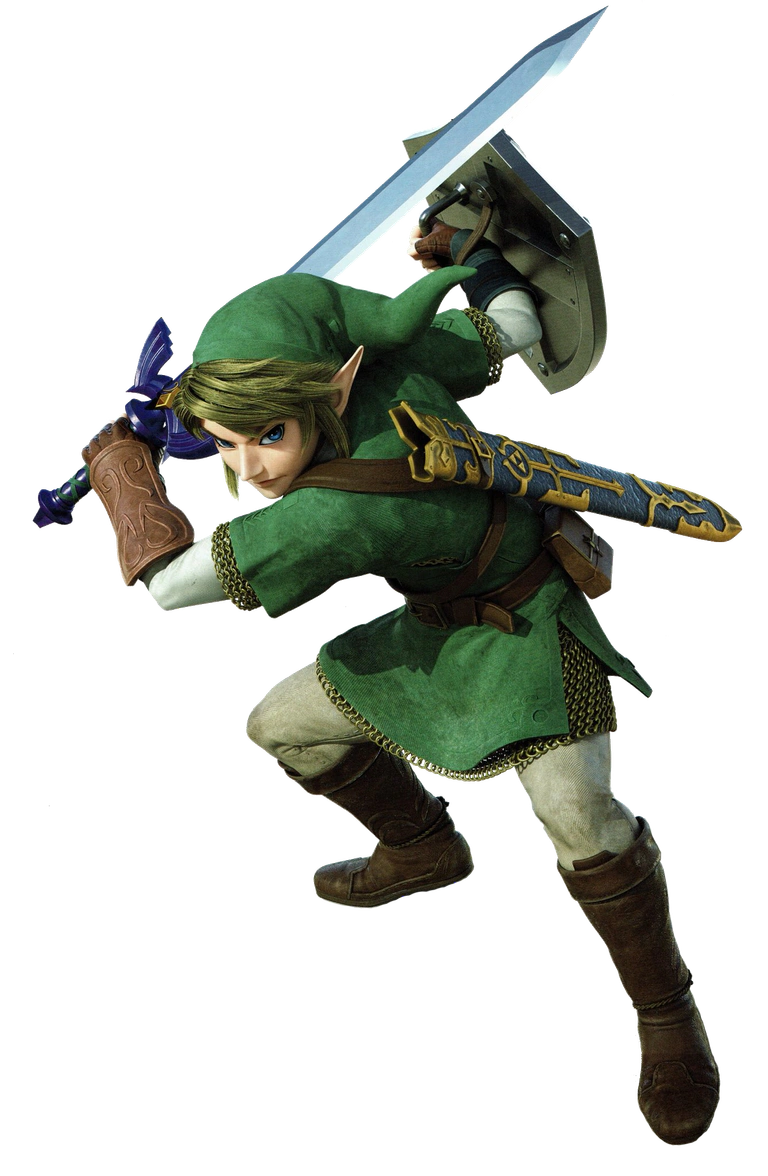
The Legend of Zelda: A Link to the Past is the third main installment of The Legend of Zelda series, and the first and only title for the Super Nintendo Entertainment System, released in November 21, 1991 in Japan and April 13, 1992 in the United States, and few months later in United Kingdom & Ireland. After the controversial side-scrolling and RPG-like gameplay of The Adventure of Link, A Link to the Past was a return to the overhead view and gameplay style of The Legend of Zelda. One of the most influential titles of the series, this game introduced major new items to the franchise such as the Master Sword, and the concept of two different worlds (Light World and Dark World), which was revisited to an extent in Ocarina of Time with two separate time periods rather than the light and dark worlds. A Link to the Past was re-released in 2002, on the Game Boy Advance, sharing a new multiplayer game called Four Swords. The Japanese version of the game is known as The Legend of Zelda: Triforce of the Gods.
The Legend of Zelda: Link's Awakening on the Game Boy is the game's direct sequel, while A Link Between Worlds on the Nintendo 3DS is the indirect equivalent.
This article is about the game. For other uses, see A Link to the Past (Disambiguation).
The Imprisoning War
One day, a band of evil thieves managed to open the gateway to the Golden Land, where the mystical Triforce was hidden. Upon finding the sacred golden relic, the leader of the thieves, Ganondorf, slew his followers and claimed it as his own. Before long, dark power began to flow forth from the Sacred Realm. People were drawn into this darkness, and never heard from again. As a result, the King of Hyrule ordered the Seven Wise Men to seal the entrance to the Sacred Realm, now known as the Dark World. A great battle ensued—monsters poured into the Light World (Hyrule) from the sacred land and attacked the castle. The Knights of Hyrule defended the Sages during the great battle against evil, and, though most of them perished in the struggle, the sages were able to cast their seal, stopping the flow of darkness and trapping the evil demon king Ganon within. This battle became known as the Imprisoning War.

The Wizard
Once the conflicts against Ganon had ceased, Hyrule entered a time of peace which lasted for centuries, until one day, when unexplained catastrophes began to occur. Pestilence and drought ravaged the land. Thinking the recent disasters plaguing Hyrule were somehow linked to the sages' seal, the king investigated it, but found it to be intact. Desperate for answers, he offered rewards for anyone who could find the source of Hyrule's troubles.

In response, a stranger named Agahnim appeared as if from nowhere and stayed the catastrophes with mighty magic. As a reward, the king gave him a new position as chief adviser to the throne, and the common folk proclaimed him their hero. Once more, peace appeared to have returned to Hyrule. Yet, all was not well. Agahnim began to govern Hyrule in place of the king and abuse his political power as he saw fit. Rumors spread saying that Agahnim planned to kill the king and take the crown for himself (which he did in-game), and that strange magical experiments were taking place in the castle tower at night. He cast spells on the soldiers and kidnapped the young maidens descended from the seven Wise Men, using their powers in an attempt to break the seal placed on the Sacred Realm to free Ganon. He manages to successfully send six of the seven into the Dark World, and the last is in desperate need of help.
Link's Quest
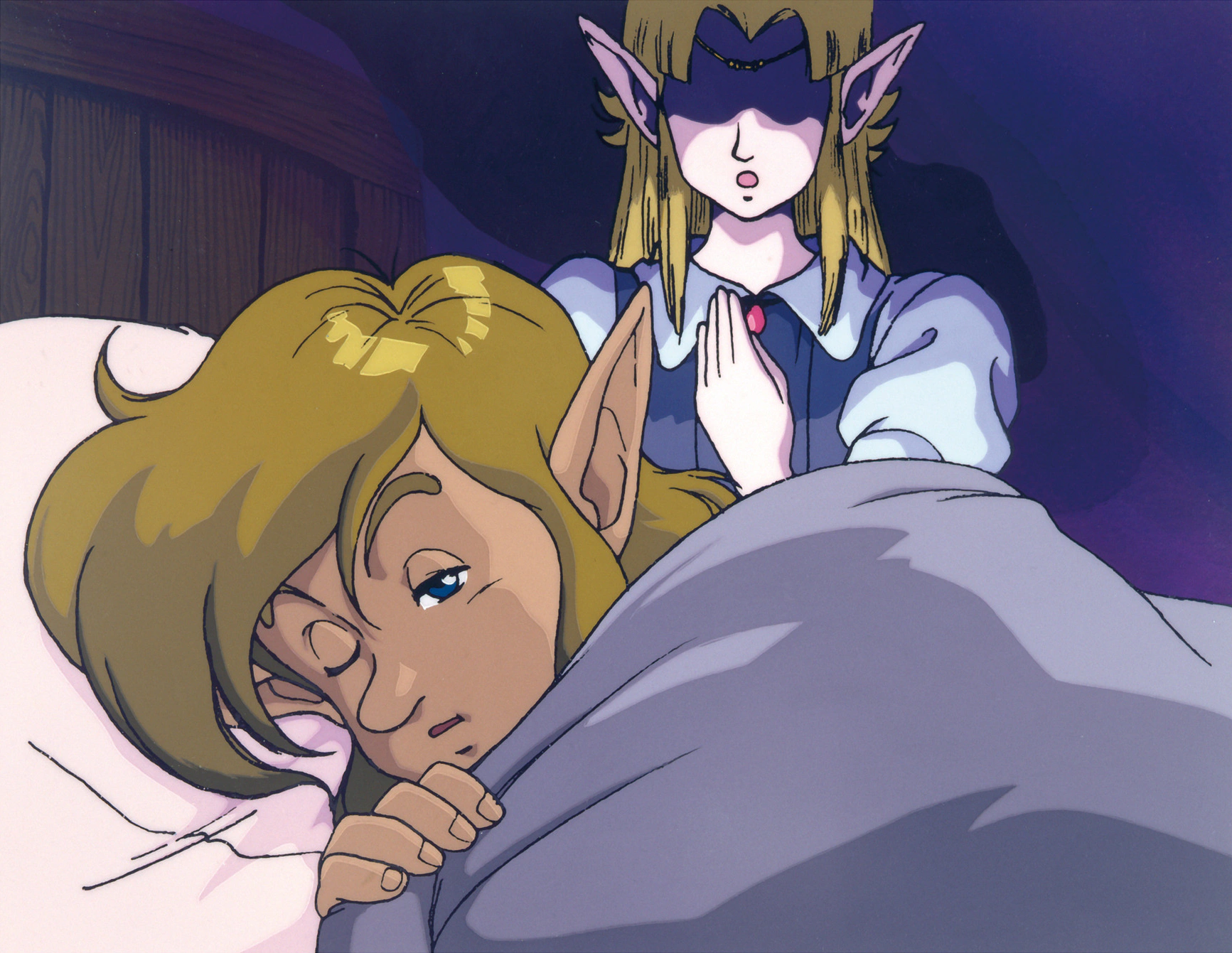
The game starts with a boy in green named Link being awakened in the middle of a stormy night by a telepathic plea from Princess Zelda, the princess of Hyrule and the seventh and final maiden herself, who tells him that she is being held prisoner in the dungeon of the castle and needs help. Now wide awake, Link finds his uncle with a sword and shield in hand. He tells Link not to leave the house, then sets off for the castle. Link ignores his uncle's warning and follows him, only to arrive at the castle to find him gravely wounded. He gives Link his weapons and entrusts him with the fate of Princess Zelda. Link proceeds to rescue Zelda himself, and the two escape the castle through its sewer system to the sanctuary just north of the castle.
There, the priest tells Link that the only weapon powerful enough to defeat Agahnim was the sacred Master Sword. He then sends him to find the elder, Sahasrahla, a descendant of the Seven Wise Men, who explains that not just anyone could wield the legendary blade, and that a hero must appear from the descendants of the Knights of Hyrule. To prove himself worthy of wielding the Blade of Evil's Bane, Link would need to acquire the three Pendants of Virtue, scattered in three dungeons.
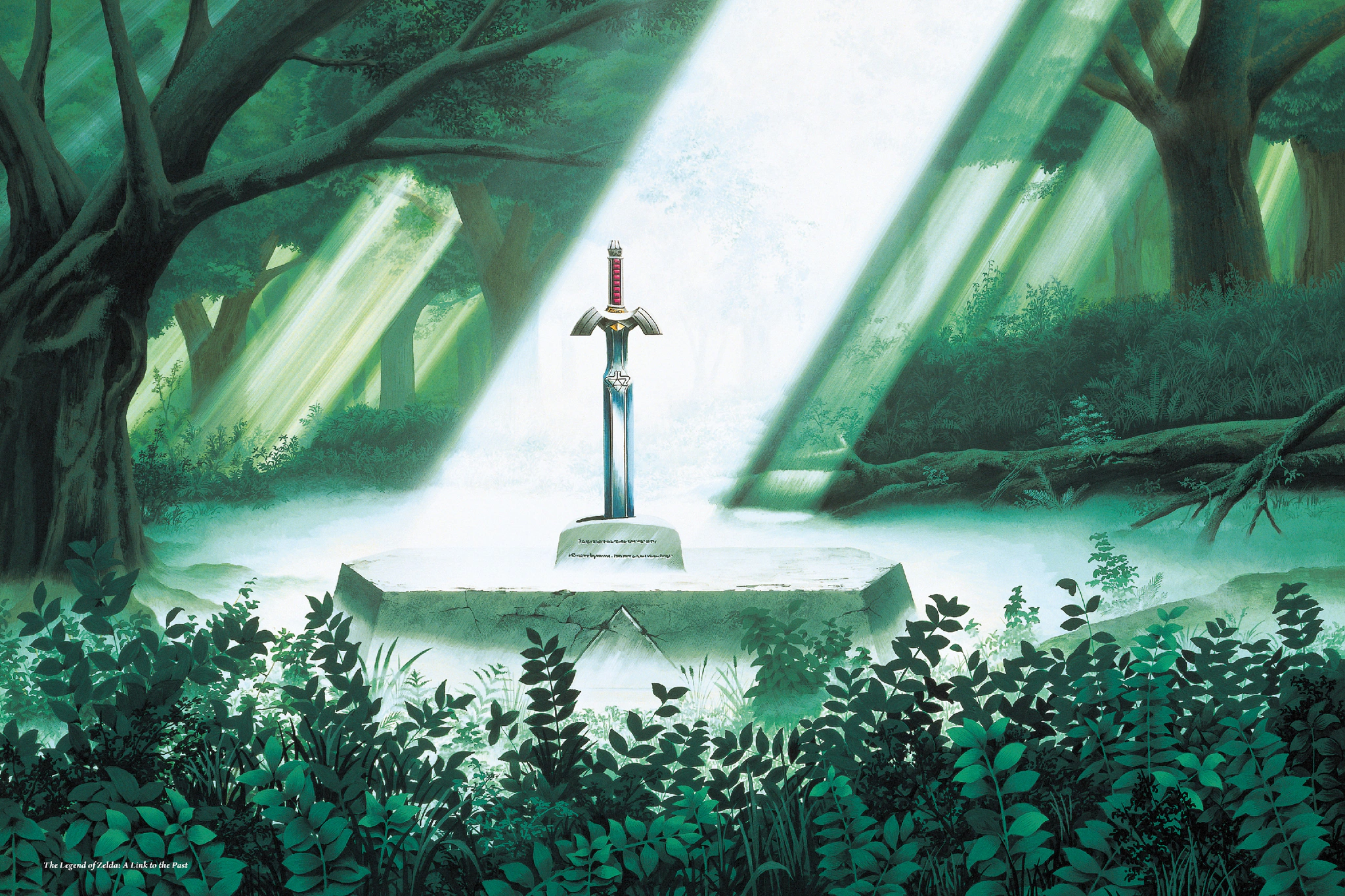
After successfully obtaining the pendants and withdrawing the magical sword from its pedestal in the Lost Woods, Zelda suddenly calls out to Link yet again, this time warning that soldiers have invaded the sanctuary and is under attack. Link hurries off to the sanctuary only to find that he was a moment too late. The priest tells the young hero that the soldiers had already taken the princess off to Hyrule Castle before dying. Once again, Link hurries to her rescue, fighting enemies along the way, and once again arrives too late, as Agahnim was already in the process of sending Princess Zelda to the Dark World to finish his ordeal. Upon completing this ritual, at last banishing all seven maidens into the Dark World, little time was needed before the Sages' seal was completely broken. Link goes on to fight Agahnim himself in a Dead Man's Volley duel with the power of the Master Sword. Although the young hero manages to injure him, the dark wizard also suddenly draws Link into the Dark World, saying he is not truly defeated, yet.

There, Link is contacted telepathically by Sahasrahla, who tells him that the world he is standing in is actually what was once the Golden Land, but it was transformed by Ganon's evil wish by the Triforce to conquer the world to become the Dark World. He then commissions Link with the task of rescuing the 7 imprisoned maidens from the dungeons scattered across this twisted, parallel land. Although the Dark World is much fiercer than the Light World counterpart, upon eventually freeing them all through crystals, including Princess Zelda, Link travels to Ganon's Tower, where the seven maidens use their combined power to dispel the powerful barrier sealing off the entrance. Link proceeds to traverse the tower and then defeat Agahnim a second time, this time killing him for good. Upon his defeat, the spirit of Ganon himself rises from the body, turns into a bat, and flies off into the Pyramid of Power, where Link chases after it, and then faces off against the Dark Beast for the final battle. With the power of the Silver Arrows and the Master Sword (or, optionally, the Tempered/Golden Sword), Link ultimately vanquishes Ganon. The young hero soon recovers the full Triforce, and by making a peaceful wish, reverts the effects of Ganon's evil reign over Hyrule, and ultimately restores the land to its former glory. Link himself, as the savior of Hyrule, would become known as the Hero of Legend.
Commonplace Mechanics
A Link to the Past returns various gameplay elements from the original NES game, among them the top-view perspective; Link can collect Rupees once more and use items by assigning them to a button, as well as recovering his life energy with hearts. Elements retained from The Adventure of Link is the ability to use Magic to perform spells and to make special items functional, as well as a major interaction with non-playable characters to obtain vital information regarding the quest.

A returning mechanic from both games is the availability of dungeons, which must be conquered in order to archive success in Link's adventure. Each dungeon has a map and a compass, the former shows the layout of the dungeon in particular, and the latter locates the boss's whereabouts; keys must be collected in order to open locked doors, puzzles must be solved to progress, and enemies must be defeated if they are interrupting the exploration. The dungeons are multi-leveled, ranging in number from two to ten, and Big Keys are needed both to open major chests (containing important items that increase Link's inventory and help him progress through his adventure) and to open boss rooms.
Similar to the Bombs in The Legend of Zelda and the Magic Meter in The Adventure of Link, various items in A Link to the Past can be upgraded either in capacity or by being turned into more advanced versions, including the Master Sword. This can be done through completing sidequests or entering certain special places. Optional weapons and items are hidden throughout Hyrule as well.
Light and Dark World
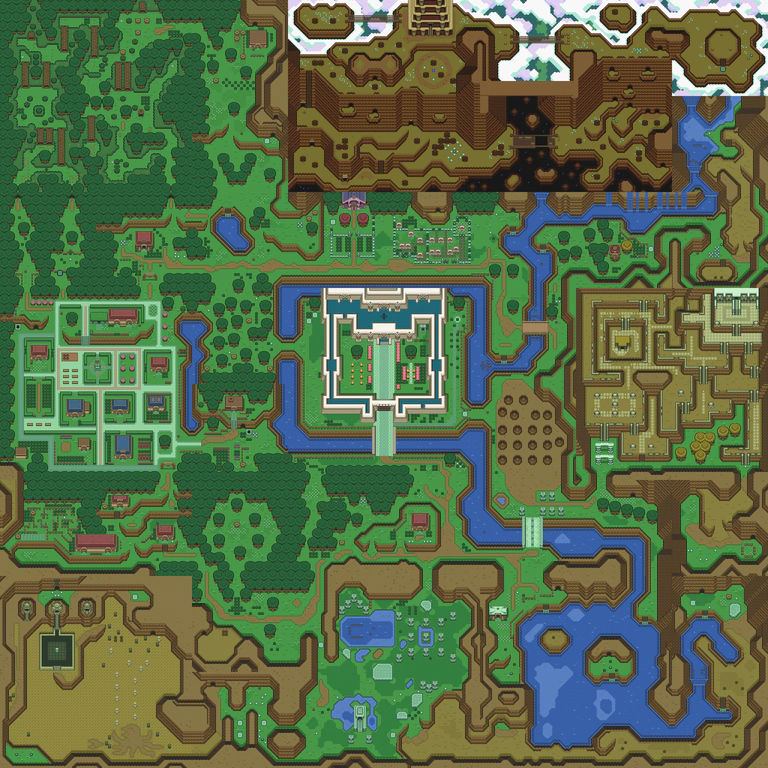
A Link to the Past introduces a unique and very important mechanic: The Light World/Dark World dichotomy. Light World is simply normal Hyrule, while the Dark World is a twisted, desolate, more dangerous parallel version under Ganon's evil reign that was once the Golden Land. The game has actually two separate maps of Hyrule, which are related to each other in several ways; for example, by switching from the Dark World to the Light World via the Magic Mirror while standing in an apparently empty dead end, Link can find in the latter world a secret cave or a passage that was otherwise inaccessible, leading to secret prizes. By doing the opposite (switching from the Light World to the Dark World), Link can gain access to new dungeons, which is important to the success of the quest. A Link to the Past is praised for cleverly using this gameplay device, which in some ways has been reused in some subsequent Zelda games such as Ocarina of Time.

This installment is also the first title in The Legend of Zelda series to have a more developed storyline, which reflects for the first time the dungeon's different purposes. The first three house the sacred pendants that give Link access to the Master Sword, the fourth has to do with a failed attempt to rescue Princess Zelda, the next seven dungeons house the imprisoned maidens, who (once freed) help Link break the seal of the final dungeon's entrance. This style of story progression was used in various later Zelda games, among them Ocarina of Time and The Wind Waker, although the latter added various twists and subversions to the concept (by adding the Triforce sub-quest, lacking a dungeon for the third pearl, etc.).
Regional Differences
The Japanese version of the game is titled. Nintendo of America changed the original name to A Link to the Past due to their censorship guidelines discouraged religious content (oddly, later games still use the word "Gods" such as The Wind Waker 's Tower of the Gods). Nintendo of Europe used the American name. The Japanese name, however, was translated faithfully in the subsequent Chinese and Korean localizations.
Nintendo of America modified meanings in the game's text for the same reason. Agahnim is a priest in the original Japanese version, but a wizard in the international release. The Cursed Fairy was originally. The became the Sanctuary and the became the Loyal Sage. Nintendo of Europe's localizations follow the American one in naming the Fat Fairy but are inconsistent with respect to the Loyal Sage and the Sanctuary, sometimes favoring the Japanese meaning and other times the American.

In the Japanese version, the Hylian symbols translated by the Book of Mudora are Egyptian hieroglyphs. The symbols are smaller and slightly jumbled in the international version (and the text is not centered). In the Eastern Palace, a symbol within a room contains what appears to be the Star of David in the Japanese release, which was changed to a more generic one internationally.
Nintendo of America censored the game's text but did not change its religious visuals. The Sanctuary retains its church pews and stained-glass windows. When Link makes a wish to enter Desert Palace, he looks skyward and appears to cross himself before joining his hands together in prayer.
Although never seen in gameplay, an artwork exists of Link knelling to a crucifix in prayer inside the Sanctuary, itself a clear reference to Christianity (earlier games did depict Shields with the Christian cross and the Book of Magic in the original game is known as the Bible in the Japanese version).
Logo
The North American and European versions of the game both use a new logo for the title screen and box art, designed by the Seattle-based Girvin design firm. This logo has been featured with slight variations in every subsequent The Legend of Zelda game in North American and Europe (identical in Link's Awakening), and in the Japanese versions starting with Ocarina of Time, with the exception of Breath of the Wild and Tears of the Kingdom.
Graphics and Audio
The game made use of the 16-bit Super NES capabilities to offer more realistic graphics over the 8-bit NES titles, not only in regards of the areas' textures and colors, but also to add new visual effects, such as the mist and the upper leaves' shadows in Lost Woods, the thunderstorm in the Dark World equivalent of Death Mountain, and so on.
The game's audio, which is greatly improved over previous games, retains the iconic overworld tune that debuted in the original The Legend of Zelda game, although it is only heard while Link is in the Light World. Several famous music in the series that would be heard in some later titles, such as Kakariko Village's theme, debuted in this game. Hyrule Castle's background theme, Ganon's theme. Princess Zelda's theme, known as "Zelda's Lullaby" in Ocarina of Time, also makes its first appearance. The Dark World's themes are unique in all regards (overworld, dungeons, etc.), meaning that the overall soundtrack of the game is far more diverse than that of the first two titles in the series.
Setting
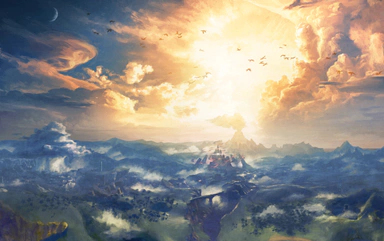
Like its predecessors (and, for that matter, most Zelda games in general), A Link to the Past is set in the fictional land of Hyrule; notably, the territory of the land is larger than in the first game, but smaller than in The Adventure of Link.
However, a Dark World counterpart - the Sacred Realm in a courrpted state by Ganon - is now included and explorable. In the Light World, familiar zones like Lost Woods and Death Mountain are present, while Kakariko Village and Lake Hylia are introduced here. In the Dark World, every location is different in name and presentation; for example, the Lost Woods is replaced by the Skeleton Forest, Kakariko Village is the Village of Outcasts, and the southwestern desert is the Swamp of Evil. The replacements also affect the dungeons which, instead of housing the Pendants of Virtue, hold captive the Maidens who were supposed to break the seal protecting Ganon's Tower.
Timeline Placement
According to the chronology of The Legend of Zelda series, A Link to the Past is the first title placed in the "Downfall" split timeline. This timeline branch starts with Ganondorf (or Ganon) successfully defeating Link, the Hero of Time, in Ocarina of Time and obtaining the complete Triforce. Despite the tragic loss of their great Hero, the Six Sages and Princess Zelda seal the villain immediately within the corrupted Sacred Realm (similar to the Nintendo 64 game's actual ending). Years later, greedy people enter the Dark World seeking the Triforce, turning into monsters and becoming part of Ganon's army. In the war that ensues, the Knights of Hyrule protect the Seven Wise Men from Ganon's minions, while they cast a seal to close off the entrance to the Dark World. Ages later, when Ganon attempts to escape from the Dark World in order to conquer Hyrule, the events of A Link to the Past take place.
According to Encyclopedia, the game's immediate sequel is Link's Awakening, which is eventually followed by Oracle of Seasons and Oracle of Ages. The English version of the Encyclopedia states that all four games feature the same Link, while the original Japanese lists the Link in the Oracle titles as a separate incarnation. Sometime after defeating Ganon at the end of this game, Link leaves Hyrule by boat when he is shipwrecked on Koholint Island, leading to the events of Link's Awakening.
During an interview around the release of Ocarina of Time, series' creator Shigeru Miyamoto stated that A Link to the Past occurred after The Adventure of Link.
Zelda.com originally stated that A Link to the Past was a sequel to Majora's Mask, taking place hundreds of years after the game, though the Link in both games was the same, having returned from Termina and finding that time passed differently between the two worlds.
Game Boy Advance
A Link to the Past was ported for the Game Boy Advance in 2002 as The Legend of Zelda: A Link to the Past & Four Swords, introducing Four Swords into the same cartridge, the first multiplayer title of the franchise. There were numerous alterations to the game, including a more accurate translation, additional shops and enemies, changing Link's voice to that of the young Hero of Time from Ocarina of Time/Majora's Mask (which had left minor confusion among fans today, as the incarnations between the SNES and N64 titles are different, and this would repeat for The Minish Cap), and the addition of an exclusivedungeon and new quest and attack unlocked only by playing through Four Swords.
Virtual Console
The original SNES version was also ported to the Wii's Virtual Console on January 22, 2007, and later onto the Wii U Virtual Console on January 30, 2014, and Nintendo 3DS Virtual Console on April 14, 2016. The re-release was virtually unchanged from the original. However, the full, bright screen flashing effect that was used on the title screen in the international release, when Agahnim or Vitreous attacks with lightning or when Link uses the Ether Medallion, was toned down significantly, to prevent the dangerous effect of epilepsy.
Satellaview
The game's engine and features were used in the later released broadcast service, the Satellaview. In 1997, BS The Legend of Zelda: Ancient Stone Tablets was released exclusively in Japan via the Satellaview. Although it is not canonical to the main series, it was presented as a sequel taking place six years after the events of A Link to the Past (like the real-world Japanese release time gap), seemingly like a unique Second Quest. Like BS The Legend of Zelda, this particular Zelda game is extremely rare and not well-known overseas.

A Link to the Past itself was also released through the Satellaview; it only has a few minor changes from the original retail version, such as the save system. Unlike the other Zelda games broadcast over the Satellaview service, it could be downloaded and played at the player's convenience. Officially, the Satellaview port does not have a differentiating title, but fans often refer to the game as BS The Legend of Zelda: Triforce of the Gods, despite this prefix being reserved for SoundLink-compatible titles.
The games were released exclusively in Japan for a brief period of time. However, like BS The Legend of Zelda, fans have managed to mostly translate BS The Legend of Zelda: Ancient Stone Tablets to English and compiled a fully playable version in a resurrection project for emulators today.
Super NES Classic Edition
The Super NES Classic Edition includes A Link to the Past as one of the 21 games available.
Nintendo Switch Online
A Link to the Past is included as part of the Super Nintendo Entertainment System - Nintendo Switch Online software, available to Nintendo Switch Online Subscribers, as one of its 20 launch titles.
Sources
Adapted from the original article, under GFDL 1.3.