
Lore
Game Over
Game Over, also stylized as Defeat in the Hyrule Warriors spin-off games…
Game Over, also stylized as Defeat in the Hyrule Warriors spin-off games, refers to the mechanic of the player ultimately losing the game when Link (or other playable protagonists) dies via his Life Gauge being completely depleted and/or when he fails his quest in The Legend of Zelda series. As a result, like most other video game media, in the vast majority of installments a menu then appears for the player having the option to resume the adventure or quitting the game, and to save their data file or not.
It is possible to prevent the loss condition from occurring in order to make Link continue his quest if he were to have at least one Fairy in an Empty Bottle (or similar items such as Secret Medicine) when he runs out of health since A Link to the Past, though few exceptions exist that bypasses this.
Although receiving a Game Over should obviously be avoided during gameplay, there are some cases of players intentionally have Link be killed by enemies or dangerous hazards to have him quickly return back to the entrance of a large Dungeon, or, rarely, restart a Boss battle.
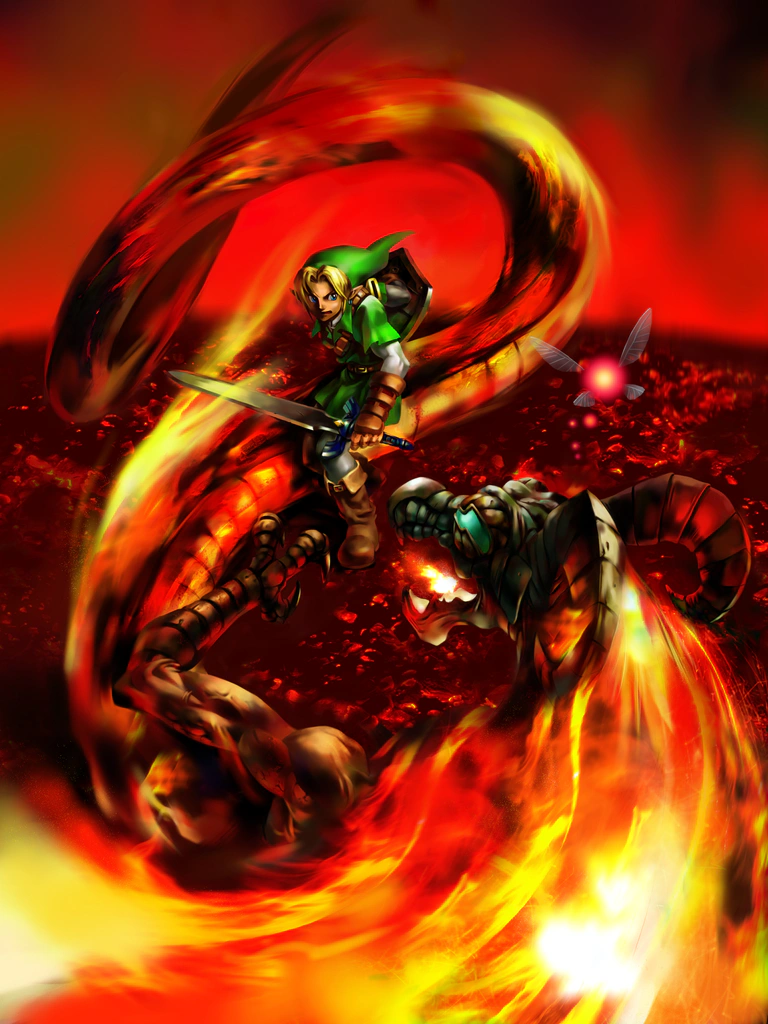
According to the Zelda Timeline, a possible canonical defeat of Link exists for Ocarina of Time when he battles against his archenemy Ganon.
The Legend of Zelda
In The Legend of Zelda, whenever Link's Life Gauge is fully depleted, enemies immediately disappear, the overworld turns red and he begins to spin around in circles before fading away completely as the world then turns black. The Game Over screen then appears, giving the player the choice to continue playing or to Saving the game and return to the File Select screen. If the player chooses to respawn, Link will start from the origin if the young hero died in the Overworld or at the beginning of a Dungeon if he was defeated inside one. The game will also count the number of times that the player has received a Game Over.

The Adventure of Link
In The Adventure of Link, the Game Over screen appears whenever Link loses a life. The screen will brightly flash (red in subsequent releases to prevent epilepsy) and the hero will turn into a silhouette and then disappear, followed by a screen showing how many lives are remaining. If Link runs out of all his lives, a different, genuine Game Over screen appears, stating that Ganon has returned, with the arch-villain laughing (in the Japanese version, a roar from bosses is heard off-screen). The player can choose to respawn at the North Castle or save and return to the Title Screen. If Link were to die inside the Great Palace, selecting "Continue" will respawn him from the entrance to the dungeon instead of the North Castle. Getting a Game Over resets Link's Experience to zero, and therefore should be avoided.

A Link to the Past
In A Link to the Past, the Game Over screen appears when Link's Heart Containers completely runs out. Similar to The Legend of Zelda, Link will spin in circles and then collapse face-first onto the ground, then being focused to the middle of the screen and disappearing as the words "GAME OVER" appear with a few options for the player. The menu allows the player to save and continue playing, save and quit the game, or don't save and respawn from the last saved point. Choosing to continue will make Link respawn in a predetermined location, depending on where the young hero had fallen. If he dies in a Dungeon, Link will respawn at the entrance to that Dungeon. Link can avoid a Game Over if he has a Fairy with him, as the Fairy will appear and heal seven Hearts from his Life Gauge after it runs out (which will carry over to later games). If the Hero of Legend died anywhere else in the Light World, he can choose to respawn in his house, the Sanctuary, or the Mountain Cave. In the Dark World, he will respawn atop the Pyramid of Power. The game also counts the number of times Link is defeated and displays them next to the save file after completing the game. During the ending credits, a breakdown of how many times Link died at various locations in Hyrule is shown.

Link's Awakening
When Link's Life Gauge is fully depleted in Link's Awakening, like in A Link to the Past, will spin in circles and fall. The Game Over menu appears and gives the player the options to either Save and continue playing, respawn without saving, or saving and quitting to the Title Screen. If the young hero steals an item from the Town Tool Shop and returns, the Shopkeeper will angrily tell Link the consequences of such act and kills him with a powerful magical lightning beam that will swiftly deplete his entire Life Gauge, in which the Secret Medicine could not revive Link from, resulting in an instant Game Over.

Ocarina of Time
In Ocarina of Time, as in the earlier 2D games, Link gets a Game Over after his Life Gauge completely runs out. He grunts weakly, falling to one knee before collapsing face-first onto the floor. All other moving objects freeze in place, and the screen darkens so that only Link himself and Navi are visible as the former collapses. If Link is killed by electricity or Ganondorf's Dead Man's Volley attack, a different animation occurs where he slowly falls on both of his knees (in real Nintendo 64 hardware, it is very slow due to framerate issues). If he dies from drowning, Link chokes and thrashes about before his body goes limp and floats to the surface of the water (if he is wearing the Iron Boots underwater when he drowns, the standard collapsing death animation is played instead). If death occurs in any hot place where the Goron Tunic is required and is not worn, Link will instantly catch on fire. The Game Over menu has the options to either save the game and respawn, respawn without saving, or to save and go to the Title Screen. The Hero of Time can avoid death if he has a Fairy, where after losing all the Hearts in his Life Gauge, he will die as usual, but the Fairy will appear and fully restore Link's life, saving him from a Game Over.

In Ocarina of Time 3D, Link dies by falling on both knees and the "Game Over" text looks different, featuring simple, white lettering rather than the bolded, fiery text of the N64 original.
Majora's Mask
In Majora's Mask, unlike most other games of the series, there are two Game Over scenarios: one is the traditional way - when Link's Life Energy depletes fully, which uses the same dying animation from Ocarina of Time, and a second where the Moon crashes into Termina. The "Game Over" text does not appear in either scenario and there is no option of saving the game or returning to the title screen, making it the first and only game within the series to do so.
For the latter, if the Song of Time is not played before the Final Day has passed, a cutscene plays that shows the Moon itself slowly approaching Clock Town as the clouds in the sky spin uncontrollably, before touching and crushing the Clock Tower and spreading a fiery inferno across all reaches of the land, destroying everything in its path. The young Hero of Time, regardless of what form he is in or where he was by the time the 72 hours are up, is then seen standing in a black void against a dark red sky at the horizon, as the fiery shockwave begins to approach him. Link braces himself and is immediately swept away, presumably killing the hero. Afterward, Majora's Mask is shown, followed by someone speaking of Link's "terrible fate" while the Happy Mask Salesman's laugh is heard in the background. The Happy Mask Salesman then seemingly saves the hero by resetting the three-day cycle, though all progress he made within the doomed cycle is lost.
The 3DS remake adds a passage of text, which reads "And so the angry moon fell from the sky, annihilating this world and its many inhabitants. All items and such gained these last three days are lost." In this case, unlike the original Nintendo 64 version, the game must be reset in order to continue.
Oracle of Seasons
In Oracle of Seasons, an instant Game Over occurs if Link gets squashed between the closing walls in two of the rooms in the Ancient Ruins.

Oracle of Ages
The Game Over screen in Oracle of Ages appears whenever Link fully depletes his Life Energy. An instant Game Over can occur if Link pesters the Great Moblin and his flunkies too many times by destroying the structure that they were attempting to build, where the Great Moblin will finally notice him and lock him inside the shack as the explosive he set goes off, blowing everything up and leaving only rubble. Staying inside the structure while it blows up also results in an instant Game Over, which cannot be prevented by a Magic Potion.
Four Swords
In Four Swords, when the Life Gauge of one Link runs out and the group doesn't have enough Rupee to revive him, the group altogether will result in a Game Over. The screen will show only the defeated Link spinning and collapsing, with the "Game Over" message appearing on screen.
The Wind Waker
In The Wind Waker, when Link's Life Gauge is depleted, he will wobble unsteadily and collapse on his back as the Game Over screen appears, the letters falling in place one by one, each letter producing a thud as it lands. The menu allows the player to either quit the game, save and quit, or respawn. If Link is knocked into Water by the killing blow, he will thrash for air, sink beneath the surface, then slowly resurface face-down and link as the Game Over screen appears. However, should the Hero of Winds run out of time while swimming, he will awaken on the shore of an island if he was close enough after drowning, although Link will still die like normal if his Life Gauge is at zero.

Link has a slightly different animation should he die on the King of Red Lions; he falls down more gently and remains in a sitting position against the gunwale of the boat, and he does not gasp upon hitting the deck. This animation is more easily seen in the HD version, as less attacks will knock Link off the boat than in the original.
Four Swords Adventures
A Game Over will occur in Four Swords Adventures if Link's Life Gauge is fully depleted, as in every other game.
The Minish Cap
A Game Over will occur in The Minish Cap if Link's Life Energy is fully depleted, or if the third bell chimes and Vaati drains the Light Force from Princess Zelda while Link battles the Dark Nut inside Dark Hyrule Castle. Link is given 3 minutes to defeat said Darknuts.

Twilight Princess
In Twilight Princess, a Game Over will occur if Link's Heart Containters are fully depleted. Upon the last hit, he lets loose a strangled gasp and staggers before he is seen collapsing to the ground accompanied by a mournful choral version of the Hyrule Field theme. If he drowns or dies while in water, his body will float lifelessly to the top of the water. Dying on Epona will result in Link collapsing on her back. Dying in Wolf form will result in Link staggering, before letting out a whine and collapsing to the ground while Minda hovers over him, shaking her head. Interestingly, Midna shares the same disappointed reaction even after Link grows on her.

If the Hero of Twilight fails to escape Barnes' Bomb storehouse, a series of explosions will appear onscreen before a final, larger one covers the player's view, revealing the Game Over screen when it fades away.
Should Link fail to extinguish the wagon's fire while escorting Telma, Ilia, and Prince Ralis to Kakariko Village, a quick shot of the burned wagon in a black void with its inhabitants dead is briefly seen before cutting to the Game Over screen.
If Link jumps into Lava while wearing the Zora Armor, fails to jump off the Great Hylian Bridge after it catches fire, or if he is hit by his own Cannon, he will immediately lose all his health, but will not get a unique death scene.
Phantom Hourglass
A Game Over will occur in Phantom Hourglass if Link loses all his hearts. When this happens, the music stops and everything freezes, Link gasps and falls on his back as the camera slowly zooms out while the Game Over music plays. If the player runs out of hearts while controlling Gongoron inside the Goron Temple, he will wobble to the ground with an animation different to that of Link before Link dies himself. If the SS Linebeck's heart containers are fully depleted, Linebeck will announce that they are sinking and the ship will mostly sink into the sea. If the Hero of Winds has any objects in his hands at the time of death, it will stay in the spot Link was holding it at, making it appear to levitate in the air.

Spirit Tracks
A Game Over will occur in Spirit Tracks if Link loses all his Life Gauge, or if the Spirit Train takes too much damage, in which it bursts into flames as Princess Zelda shouts Link's name. If Link is carrying a passenger and crashes the train, the passenger is the one who says something rather than Zelda. The animation of Link collapsing and the camera zooming out is shared with Phantom Hourglass '; however, Link's dying gasp is different due to him having a different voice actor, the music is different and the words 'Game Over' also fall between two wisps of smoke.

Skyward Sword
A Game Over will occur in Skyward Sword if Link's hearts run out, in which he will react in several ways depending on how he died. If he was launched from the front, he will attempt to stand up off his back before expiring and vice versa. If Link is hit by a Sky Octorok or a tornado, the camera will focus on him falling before cutting to the Game Over screen. Link also has an animation for drowning, but should he drown while crawling through a tunnel, he will use his "Launched from behind" animation instead.

Instant Game Overs include if the Hero of the Sky is run over by the Boulder inside the Earth Temple, if Link is touched by lava near the Puzzle Key inside the Fire Sanctuary, if he is crushed by the statue in the Ancient Cistern after obtaining the Blessed Idol, or if Link allows The Imprisoned to destroy the Sealed Temple by reaching the top of the Sealed Grounds. The former two events yield no unique cinematic but in the case of the Ancient Cistern statue, Link is heard screaming as the statue lands on and crushes him and for The Imprisoned, it advances towards the Old Woman while roaring, who despairs that it is too late and all is lost before the screen fades to black.
A Link Between Worlds
A Game Over will occur in A Link Between Worlds if Link's heart meter runs out. He will spin around and subsequently fall to the ground, similarly to A Link to the Past, before the screen fades to black and the words 'Game Over' appear. If Link was renting any tools from Ravio, they will scatter around him before Sheerow grabs them and flies away.

Link will respawn in Ravio's Shop, unless the Game Over occurs in a dungeon, in which case the option will be presented to spawn in said dungeon or inside his house. Should this happen in Lorule before Link has traveled back to Hyrule via a Fissure, Link respawns inside the Blacksmith.
Because Sheerow collects Link's Item and forces him to buy them again, and because Ravio asks him if he is all right afterwards, it is implied that running out of hearts does not cause Link to die in this game; rather, Ravio (in Hyrule) or the Blacksmith (in Lorule) drag Link back to their respective House upon his defeat.
Tri Force Heroes
A Game Over occurs in Tri Force Heroes when the Links have run out of Fairies and deplete their Life Gauge or fail at a Drablands Challenge. Failing a time-based Drablands Challenge leads to a Game Over regardless of how many Fairy remain. However, such an event in Tri Force Heroes is functionally the same as when a Level is completed; no penalty is accrued and the amount of Game Overs the player receives are not recorded. Any accumulated Rupee and screenshots taken with the Camera are kept, progress is saved automatically, and the Links return to the lobby in Hytopia Castle. A disconnection from a Multiplayer game is handled in the same manner, except the "Game Over" text and accompanying music do not appear.

Breath of the Wild
In Breath of the Wild, a Game Over will occur when Link runs out of Hearts. If he is hit by a strong enough attack, the hero's body will ragdoll before the Game Over screen appears. If he is hit by a weak attack, he goes through a pre-rendered animation of him stumbling before he collapses. A first for the 3D games, likely for realism, if Link falls from an incredible height and crashes to the ground, this will result in an instant Game Over, as all Heart Containers will be immediately depleted regardless of his armor.

Getting a Game Over presents the options to either continue the game from the most recent save, or to quit and return to the main menu. The 'Game Over' text will usually appear in red, however it can appear in blue or yellow if Link dies as a result of drowning or freezing or if he dies from an electricity-based source, respectively.
If the base game has been updated or DLC is installed and enabling the Hero's Path Mode, it will display areas where the Hero of the Wild has died with a red cross and "R.I.P." text when hovered over. Reaching a death marker while viewing Link's journey results in an impact noise and the sound of Link falling into an abyss as his marker disappears, before it swiftly reappears where he respawned. In all versions of the game, the "R.I.P." marker will permanently appear on the map where the last Game Over has occurred; a new marker replacing the old with each death.
Tears of the Kingdom
In Tears of the Kingdom, a Game Over functions identically to that of the previous game, reusing the same voice clips and ragdoll physics. However, the menu has been updated to reflect the game's new themes (notably showing the dragon ring logo behind the word "GAME OVER").
A Game Over will also occur if Riju's health is depleted whilst defending Gerudo Town from Gibdos, in which she is shown dropping to one knee and weakly apologizing to Link before the screen fades in.
As in its predecessor, an instant Game Over can occur if Link falls from an extreme height and hits the ground.
Echoes of Wisdom
In Echoes of Wisdom, a Game Over occurs when Princess Zelda runs out of health and doesn’t have any Fairies. When this happens, she will utter a soft moan before collapsing face first to the ground. If Zelda dies in the water via enemy attack or drowning, a similar animation will play out, but the princess' limbs will splay out in the water.
Hyrule Warriors
When a warrior loses all of their health in battle, they will scream and fall to the floor as the word "Defeat" appears in purple writing. A remix of the game over music from Ocarina of Time and Majora's Mask will play during this. This screen can be skipped with the + button. The player can then choose to continue from their last save point (or restart the whole battle in Adventure Mode). Interestingly, the character being controlled is seen breathing after being defeated, implying they didn't actually die (unlike the main games) but their forces simply had to withdraw due to being unable to take on the mission without them able to fight. If a vital character that isn't playable is forced to flee, this can cost the battle. The player can also lose if a mission-critical base is taken over by enemy forces. In Legend/Free mode, a support character will lament this before the screen appears.
Sources
Adapted from the original article, under GFDL 1.3.