
Work
The Legend of Zelda
The Legend of Zelda (sometimes called "Zelda 1" or "Original Zelda" by fans) is…
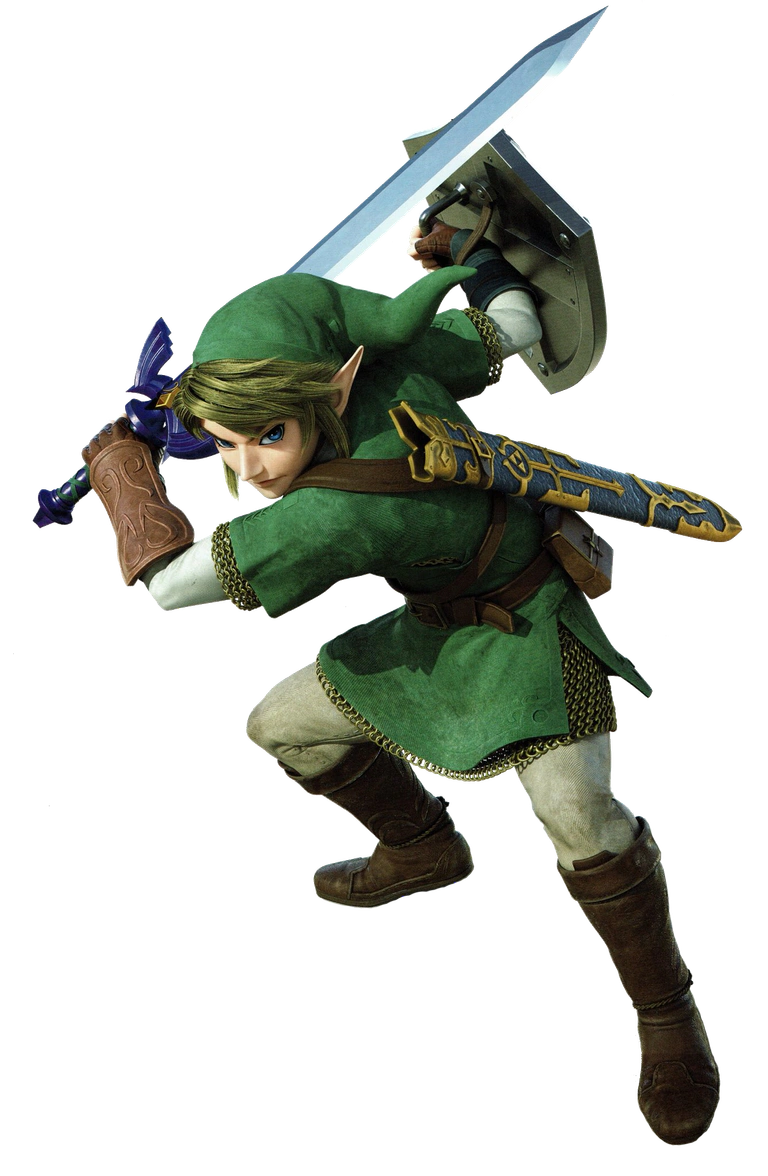
The Legend of Zelda (sometimes called "Zelda 1" or "Original Zelda" by fans) is an action-adventure game developed and published by Nintendo, originally released on February 21, 1986 for the Famicom Disk System in Japan and internationally on the Nintendo Entertainment System in 1987. It is the titular launch title of The Legend of Zelda series. The game's plot centers around a young swordsman adventurer in green named Link, to protect the fantasy Kingdom of Hyrule from the evil porcine-like monster Ganon who plans to rule it by force, rescue Princess Zelda, and claim the Triforce to restore peace, which would become the central theme for the currently long-running franchise. Like most other early Zelda games, it has since been re-released multiple times for several platforms, including the Nintendo GameCube, the Game Boy Advance, as well as the Virtual Console and Nintendo Switch Online. The Japanese version of the game is known as The Hyrule Fantasy: The Legend of Zelda.
A breakthrough game of its age not unlike its contemporary Super Mario Bros., as this NES title is the first installment - therefore the one that debuted a majorly successful series that since became one of Nintendo's flagship franchises (alongside Mario and Pokémon) and popularized the 2D action-adventure genre, The Legend of Zelda is widely considered one of the most important and influential video games ever created, and was highly popular during its release, selling 6.5 million copies worldwide. For a time, it was the best-selling Zelda game until Ocarina of Time on the Nintendo 64 (which repeated its revolution for 3D) in 1998, selling 7.6 million. Therefore, it held the record for 12 years.
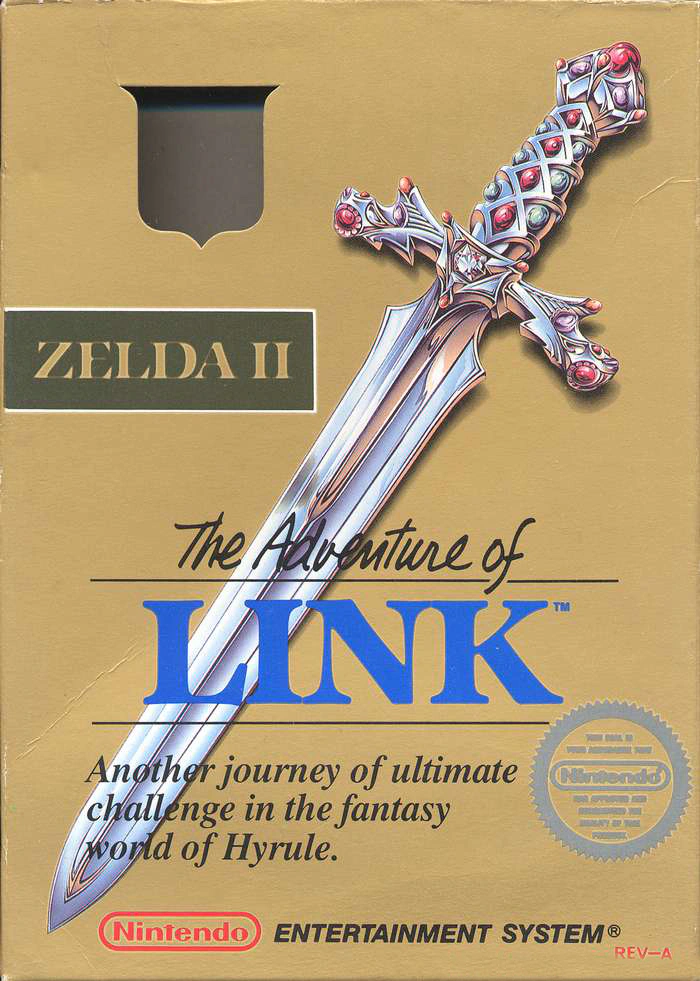
The following installment, Zelda II: The Adventure of Link, is the game's direct sequel.
This article is about the original game. For the series itself, see The Legend of Zelda (Series). For other uses, see The Legend of Zelda (Disambiguation).
Story
"A long, long time ago the World was in an age of Chaos.

"In the midst of this chaos, in a little kingdom in the land of Hyrule, a legend was being handed down from generation to generation, the legend of the 'Triforce'; golden triangles possessing mystical powers. One day, an evil army attacked this peaceful little kingdom and stole the Triforce of Power. This army was led by Ganon, the powerful Prince of Darkness who sought to plunge the World into fear and darkness under his rule. Fearing his wicked rule, Zelda, the princess of this kingdom, split up the Triforce of Wisdom into eight fragments and hid them throughout the realm to save the last remaining Triforce from the clutches of the evil Ganon. At the same time, she commanded her most trustworthy nursemaid, Impa, to secretly escape into the land and go find a man with enough courage to destroy the evil Ganon. Upon hearing this, Ganon grew angry, imprisoned the princess, and sent out a party in search of Impa."
"Braving forests and mountains, Impa fled for her life from her pursuers. As she reached the very limit of her energy she found herself surrounded by Ganon's evil henchmen. Cornered! What could she do? ... But wait! All was not lost. A young lad appeared. He skillfully drove off Ganon's henchmen, and saved Impa from a fate worse than death."
"His name was Link. During his travels, he had come across Impa and Ganon's henchmen. Impa told Link the whole story of Princess Zelda and the evil Ganon. Burning with a sense of justice, Link resolved to save Zelda, but Ganon was a powerful opponent. He held the Triforce of Power. And so, in order to fight off Ganon, Link had to bring the scattered eight fragments of the Triforce of Wisdom together to rebuild the mystical triangle. If he couldn't do this, there would be no chance Link could fight his way into Death Mountain where Ganon lived."
"Can Link really destroy Ganon and save Princess Zelda?
"Only your skill can answer that question. Good luck. Use the Triforce wisely."
-Instruction Manual
Gameplay
Although rather basic by today's standards and in comparison to most later installments of the franchise, the gameplay of the original The Legend of Zelda introduced a revolutionary level of gaming for its time that has since become standard for The Legend of Zelda series as a whole (and other games inspired by it). Many of its innovations include freely exploring a vast overworld, distinctive music, the ability to use multiple different inventory items, solving puzzles, fighting enemies or bosses directly in various dungeons, the ability to take damage without fear of immediately dying due to the use of a health meter mechanic, and being able to save the player's progress in a home console (which can be quickly done by pressing Up + A with a second controller on the inventory screen). At the time of release in 1986, The Legend of Zelda was considered one of the most complex action-adventure games and its ruleset was a significant leap compared to the likes of Adventure (which previously was the most popular title of the genre) and the Swordquest series released prior on the Atari 2600, one of the main contributing factors of its great success.

Despite there being no direct confirmation by Nintendo that The Legend of Zelda had taken inspiration by Atari, Inc.'s Adventure (released in 1980), the NES game shares a few elements. Aside from real-time open-world gameplay (although enemies do not chase Link from one area to the next nor actions by them occur off-screen), their settings are based on a medieval fantasy kingdom attacked by an evil sorcerer, having items with prescribed abilities, the protagonist fights dragon-like monsters with a sword (Zelda 's case being Aquamentus and Gleeok) and must acquire a sacred object (Enchanted Chalice and Triforce, respectively) to complete the game. Because of these connections, some fans have considered this title as Adventure 's "spiritual successor".
Dungeon Exploration
Barring Link's progress are Creatures he must battle to locate the entrances to nine underground Dungeons. Each Dungeon is a unique, maze-like collection of rooms connected by doors and secret passages and guarded by monsters different from those found in the overworld. Link must successfully navigate each Dungeon to obtain one of the eight pieces of the Triforce of Wisdom. Dungeon also conceal useful items, such as a Boomerang for retrieving items and stunning enemies and a Recorder with magical properties. The first six Dungeon have visible entrances, but the remaining three are hidden. Except for the final Dungeon - Death Mountain, which can't be entered until the previous eight have been completed, the order of completing Dungeons is somewhat arbitrary, but many Dungeon can only be reached or completed using items gained in the previous one.
Overworld Exploration
Non-linearity, the ability to take different paths to complete the game, separated The Legend of Zelda from its contemporaries (although it is not the first game ever to have this type of exploration). Link can freely wander the Overworld, finding and buying items at any point. This flexibility enables unusual ways of playing the game; for example, it is possible to reach the Final Boss of The Legend of Zelda - Ganon, without actually taking a Sword (but cannot be defeated, however). Nintendo of America's management initially feared that players might become frustrated with the new concept, left wondering what to do next. As a result, the American version of the game's instruction manual contains many hints, tips, and suggestions for players.

Second Quest
After completing the game, the player has access to a more difficult quest, officially referred to as the Second Quest, where Dungeon and the placement of items are different, with stronger enemies. Although a more difficult "replay" wasn't actually unique to The Legend of Zelda, as earlier media already used this concept including Nintendo's own Super Mario Bros., few games offered a "second quest" with entirely different levels to complete. Interestingly, entering "ZELDA" as the player's name starts the Second Quest immediately, making it one of the first Nintendo games to have a hidden code. The Second Quest can be replayed each time it is completed.
Development
Shortly before starting the concurrent development of Super Mario Bros. for the Mario franchise in 1984, Shigeru Miyamoto began developing The Legend of Zelda as a launch title for the Family Computer Disk System, an add-on for the Famicom using floppy disk media for storing games rather than cartridges. Miyamoto got inspiration for an adventure game from his own explorations to the countryside and hillsides around his home. Seeking to create a fairytale setting, co-developer Takashi Tezuka drew inspiration from J. R. R. Tolkien's The Lords of the Rings novel trilogy when writing the story. With the medieval sword and sorcery theme set, Miyamoto wanted to have treasure hunting gameplay to also bring in the sense of adventure seen in movies such as Indiana Jones. The game began as a two-player dungeon creator, but later became a one-player game with underground dungeons that surrounded Death Mountain, with forests, lakes, and Hyrule Field added eventually as they wanted to explore above ground too. Miyamoto wanted to call the game "The Legend of something", so a PR planner suggested "Zelda", the name of F. Scott Fitzgerald's wife, for not only the title and eventual highly successful franchise, but also the eponymous princess character.
Japanese Version
The Legend of Zelda was originally released in 1986 as a launch title for the Famicom Disk System in Japan as Zelda no Densetsu - The Hyrule Fantasy, alongside Super Mario Bros. The Lost Levels (known as Super Mario Bros. 2 in that region) for the Mario series. Apart from facilitating data saving, the disk drive also added an extra wavetable sound channel on top of the Famicom/NES' original five. This has caused the original release to sport quite a different yet unique sound compared to the more widespread Nintendo Entertainment System cartridge release and was considered revolutionary for the time. This difference is most notable during the title screen. As the game's sequel, The Adventure of Link, was also originally released on the FDS, this is also the case as well. In 1994, the game was re-released in Japan under the standard Famicom cartridge format under the name Zelda no Densetsu 1 (despite its copyright year saying 1992). Therefore, this version does not have the exclusive sound effects heard in its initial Disk System counterpart. Interestingly, because The Legend of Zelda was first released in this format, some official artwork exists of Link holding or standing on top of the game floppy disk. Noticeably, in the FDS release, the font for the game's HUD is in a different, thinner lettering compared to the international version.

The Book of Magic item is known as the Bible in the Japanese version of the game. This was likely changed because, at the time, it violated Nintendo of America's very strict content guidelines which disapproved of any real-world religious content or references inside games released for their systems. Strangely enough, all depictions of the Christian cross were kept intact.
The Pols Voice enemy, which is known to hate loud noises, was specifically designed for the microphone on the second controller of the Famicom, where it will die instanty upon detecting any sound (though can still be slain by the Sword, otherwise). In the international version, however, because the NES lacks such a unique feature, players must resort to Arrows to quickly defeat them, Ironically, these items are ineffective against Pols Voices in the initial release.The Japanese Famicom Disk System version was included in a promotional package of Charumera-brand ramen, and was only given out as a prize for a contest (only 1,500 copies were made). It is unknown what differences this version has compared to the original release, as the only available existing copies in the region are extremely rare and incredibly expensive. Another major issue is floppy disks are known to be fragile and tend to become damaged from age and/or usage more easily than ROM cartridges, rendering them unplayable. In fact, the disks themselves lack a shutter to reduce costs and the device has a poor quality disk drive along with other problems such as slow loading times, earning criticism and causing the add-on machine to become discontinued as early as 1993. In spite of this, Nintendo kept supporting it for repairs until 2007, alongside the Famicom/NES itself (and later cartridge-based consoles).

Graphics and Audio
Being a game originally designed for storage on a floppy disk, the game's graphics do not use too many elements; sprites are given different color palettes depending on their location in the overworld. For example, trees can be colored either green or orange; brick walls in dungeons are painted blue, green, yellow or white, and so on.
The game features three background themes: the overworld tune, the standard dungeon tune and the final dungeon tune. The first theme has become the franchise's main theme, and it is reused in most later games in the series. The normal dungeon theme is reused as the theme for the Royal Crypt in The Minish Cap and in the Color Dungeon in Link's Awakening DX. Sound samples, such as the one when Link collects a new item and the one when a new path is open, are also often reused in later The Legend of Zelda games.
Regional sound differences
The original Japanese Famicom Disk System version of the game utilizes the disk system's additional frequency-modulation synthesis chip; the title/credits music and certain sound effects are more advanced than the international Nintendo Entertainment System release as a result. Below are some examples of the latter.
Boss roar (from Aquamentus, Gleeok, and Ganon):
Dungeon doors opening/closing:
Recorder music:
"Found secret" jingle:
FDS version
NES version
FDS version
NES version
FDS version
NES version
FDS version
NES version
FDS version
NES version
FDS version
NES version
Setting
With this game being the first ever in the long-ongoing franchise, it is the first time Hyrule is portrayed, and it is divided into numerous parts and landscapes, such as the Lost Woods, Death Mountain, a central lake, a forest, a graveyard, and a shore; as Link walks through them, he manages to find the hidden labyrinths where the fragments of the Triforce are kept. It is unknown whether or not the nameless regions reappeared in later games with official names.

Unlike most Overworlds in The Legend of Zelda series, this incarnation of Hyrule is completely explorable from the beginning, meaning that Link can go to almost any corner and space of it, with a total absence of linearity (Breath of the Wild and Tears of the Kingdom closely repeats this game's feature). It should be noted that the overworld remains largely unchanged in the Second Quest, with the only changes being the locations of the labyrinths and of special prizes.
Timeline Placement
According to the Zelda Timeline revealed in Hyrule Historia, The Legend of Zelda takes place in the "Downfall" branch, which, as a whole, takes place after Ocarina of Time, following the tragic defeat of the Hero of Time by Ganon. After Ganon himself is defeated in A Link to the Past, Oracle of Seasons/Ages, and in A Link Between Worlds where Link and Princess Zelda recovered the complete Triforce from Yuga Ganon, Hyrule entered The Golden Era, in which the wise Hyrule monarchs used the Triforce to govern the land. The events of Tri Force Heroes and Echoes of Wisdom then occurred. After the king's death and the attempt by the Prince of Hyrule to assemble the full Triforce, Hyrule was lead into the 'Era of Decline'. The Prince of Darkness, Ganon, was revived, leading to the events of this title. Six years later, the events of The Adventure of Link take place, which itself is the end of the branch.
Both this game and its sequel are linked in continuity, since The Legend of Zelda revolves around retrieving two of the major fragments of the Triforce (Power and Wisdom), and Ganon is fought and defeated in order to rescue Princess Zelda; The Adventure of Link revolves around finding the third major fragment in order to revive a different incarnation of Zelda that was comatose for a very long time, and to impede the revival of Ganon himself.
Mistranslations
The Legend of Zelda is littered with mistranslations, direct word-for-word translations, and odd quotes.

The intro story is written poorly, such as stating the Triforce piece Ganon stole is the "Triforce with power", instead of Triforce of Power. For the GBA and Wii Virtual Console ports, the message was entirely rewritten and corrected.
This is the first Zelda game in which Ganon is written as Gannon. This spelling was also used in the Famicom Disk System version of The Adventure of Link and in the Super Famicom (Japanese SNES) release of A Link to The Past.
The Old Man is well known for his vagueness in messages. One of his most famous quotations is "DODONGO DISLIKES SMOKE", indicating the Dodongo's weakness to Bombs. Another odd quote is "DIGDOGGER HATES CERTAIN KINDS OF SOUND".
The list of items is titled "all of treasures". The "of" was omitted in subsequent re-releases.
When Link pays the Old Woman behind the waterfall, she will tell him to "Go up, up, the mountaintop." This was corrected to saying, "Go up, up, the mountain ahead". This refers to the path to Level-5.
Credits
In the credits, all but the executive producer Hiroshi Yamauchi are listed under pseudonyms. Designer Takashi Tezuka is credited as "Ten Ten," sound composer Koji Kondo as "Konchan," programmer I. Marui as "Marumaru." At the time, nicknames were commonly used among Japanese game developers as a company measure against employee poaching.

Producer and director Shigeru Miyamoto is listed as "S. Miyahon," a mistranscription of his name — 本 can be read as either "moto" or "hon." This is widely believed to be another error in translation. However, in a leaked prototype of the game, many of the staff — including Miyamoto — were credited under their real names. The pseudonym "Miyahon" was thus chosen deliberately for the final release.
Ports and Remakes
In 1989, Nintendo released a Game & Watch edition of the game simply named Zelda. This particular model of the Game & Watch for this version is in the dual-screen design in what would inspire the Nintendo DS.
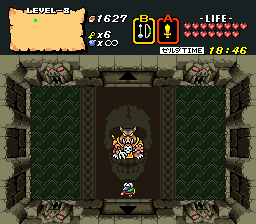
An extremely rare 16-bit remake of the original game, BS The Legend of Zelda, was broadcast via the BS-X Broadcasting System for the Super Famicom's Satellaview in 1995 and 1997, based on the First and Second Quest, respectively. The gameplay is generally similar to the original, but differs as the game's central heroes are the mascot characters of the BS-X Broadcasting System rather than Link, who are otherwise supposed to be the player itself as the character's name and gender is associated with the broadcasting ID, as well as as altered dungeons and overworld. Aside from the initial green tunic resembling Link's, the male character wears a backwards baseball cap, and the female character has long red hair, similar to Princess Zelda. These particular heroes would appear again in BS The Legend of Zelda: Ancient Stone Tablets (based on A Link to the Past), also broadcasted on the service in 1997. Those exclusive games' time-based gameplay would later inspire that of Majora's Mask.
In 2003, Nintendo released a bundle for the Nintendo GameCube which included the Collector's Edition, in which The Legend of Zelda is playable. This version notably provided a different and more accurate translation of the game script, which was used in most subsequent ports of the game. It also included a few other minor changes, such as reduced screen flashing to prevent seizures, which is followed in the Virtual Console and Switch Online ports.
The original Animal Crossing of the series of the same name, released in 2002, includes a number of emulated NES games as furniture pieces, though some are inaccessible without external assistance. The Legend of Zelda is one such unobtainable game, requiring either a cheating device or having a save file for the game on the memory card of the GameCube.The Legend of Zelda saw a port on the Game Boy Advance as part of the "Classic NES Series" re-releases in 2004.
Ports of The Legend of Zelda were released on the Virtual Console service for the Wii, Nintendo 3DS, and the Wii U. The Wii Virtual Console port was released in 2006 in most regions, releasing alongside the launch of the service. The 3DS Virtual port was initially available on August 31, 2011, as one of the games eligible for free download as part of the Nintendo 3DS Ambassador Program, a service available to players who bought a 3DS before its price dropped on August 11, 2011. It was later released to the public in 2012 in most regions. The Wii U Virtual Console port was released in 2013. Nearly all Virtual Console ports use the updated changes from the 2003 Collector's Edition version, with the exception of the 3DS Virtual Console port, which instead uses the original game's script.
Super Smash Bros. Brawl features a number of timed, short demos of classic games, called "Masterpieces", in which players may only play up to a certain number of minutes depending on the game. The Legend of Zelda is offered as one of the Masterpieces, and is limited to only two minutes of gameplay time. It returns as part of the Masterpieces library of Super Smash Bros. for Wii U, where the playtime for the demo has been doubled to four minutes.
The NES Classic Edition includes The Legend of Zelda as one of the 30 games available in emulator-based console, alongside The Adventure of Link.
The Nintendo Entertainment System - Nintendo Switch Online software, available to Nintendo Switch Online Subscribers, included The Legend of Zelda as one of its 20 launch titles. Later on during the platform's life, a "special save data" for the game was introduced, titled "The Legend of Zelda™ Living the life of luxury!", that starts the game with more items and Rupees in the players' possession, making the adventure significantly easier. The October 2022 monthly missions included playing The Legend of Zelda (which could be either the main game itself or the special save data version). Although not technically a port of the game itself, September 2022's rewards utilized various NES sprites, including Ganon, a blue moblin, Link, Princess Zelda, and an Old Man from the first Zelda game as part of the rewards for Week 2.
On November 12, 2021, as part of 35th anniversary of The Legend of Zelda franchise, Nintendo released a limited edition Game & Watch: The Legend of Zelda, a device similar in shape and size to the original Game & Watch systems, but with the addition of a D-pad and a color LCD screen. The device contained three ports from the series, The Legend of Zelda, Zelda II: The Adventure of Link, and the original Game Boy release of The Legend of Zelda: Link's Awakening. The system also included a Zelda-themed version of the Game & Watch game Vermin, where Link replaces Mr. Game & Watch as the playable character, as well as a timer and a clock, based around The Adventure of Link and the first game respectively.
Sources
Adapted from the original article, under GFDL 1.3.