
Lore
Oracle Series
The Oracle series is the name given to the two simultaneously released Game Boy…
The Oracle series is the name given to the two simultaneously released Game Boy Color The Legend of Zelda games, Oracle of Seasons and Oracle of Ages, made by Capcom and Nintendo. The two games of the series are similar in gameplay, but also have unique features of their own. The two games of Oracle of Seasons and Oracle of Ages have parallel plot-lines and can be played independently, but can be linked together to form a larger story.
Oracle of Seasons
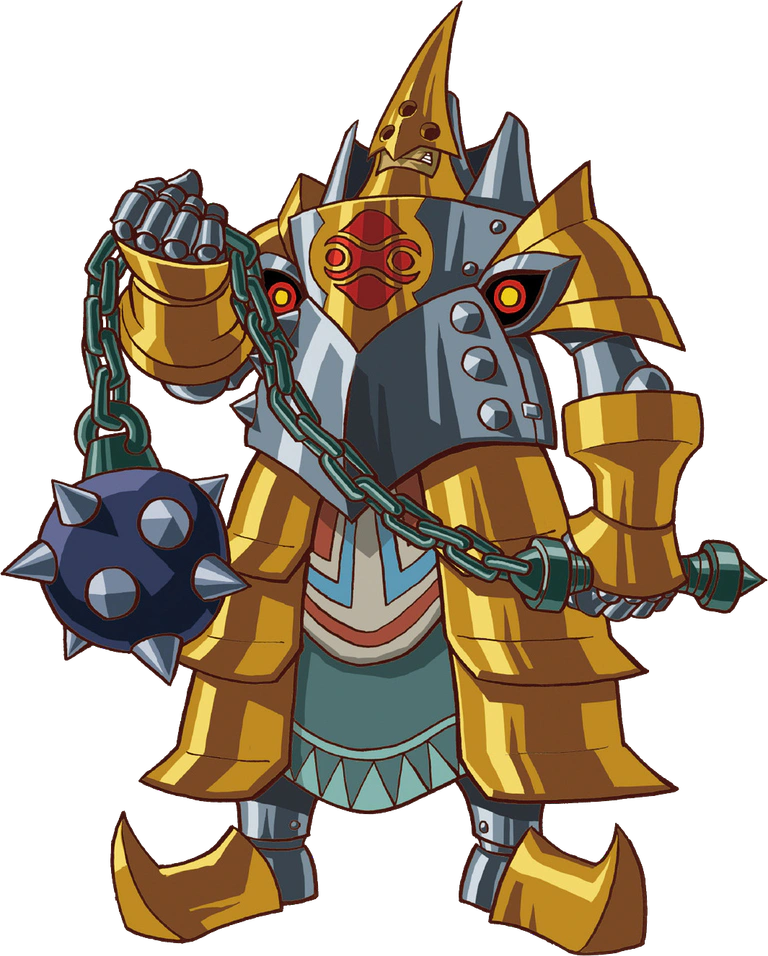
Oracle of Seasons follows Twinrova's plot to light the Flame of Destruction. General Onox, their servant, plans to abduct Din and sink the Temple of Seasons to throw the seasons of Holodrum into total and complete chaos. Link must wield the Rod of Seasons and master the Essences of Nature to return Holodrum to regularity.
Gameplay in Oracle of Seasons centers on action.
Oracle of Ages
Oracle of Ages follows Twinrova's plot to light the Flame of Sorrow. Their minion, Veran uses her power of possession to take control of Nayru and disrupt the flow of time, causing great pain and sorrow in the land of Labrynna. Her actions lock two periods of time together and alter history. Her ultimate goal is to cause as much sorrow as she can, and increase her own powers by forcing the populace to construct a large tower without rest or mercy. Link must harness the Harp of Ages to control the flows of time and stop Veran from destroying Labrynna.
Gameplay in Oracle of Ages centers on puzzle-solving.
Resurrection of Ganon
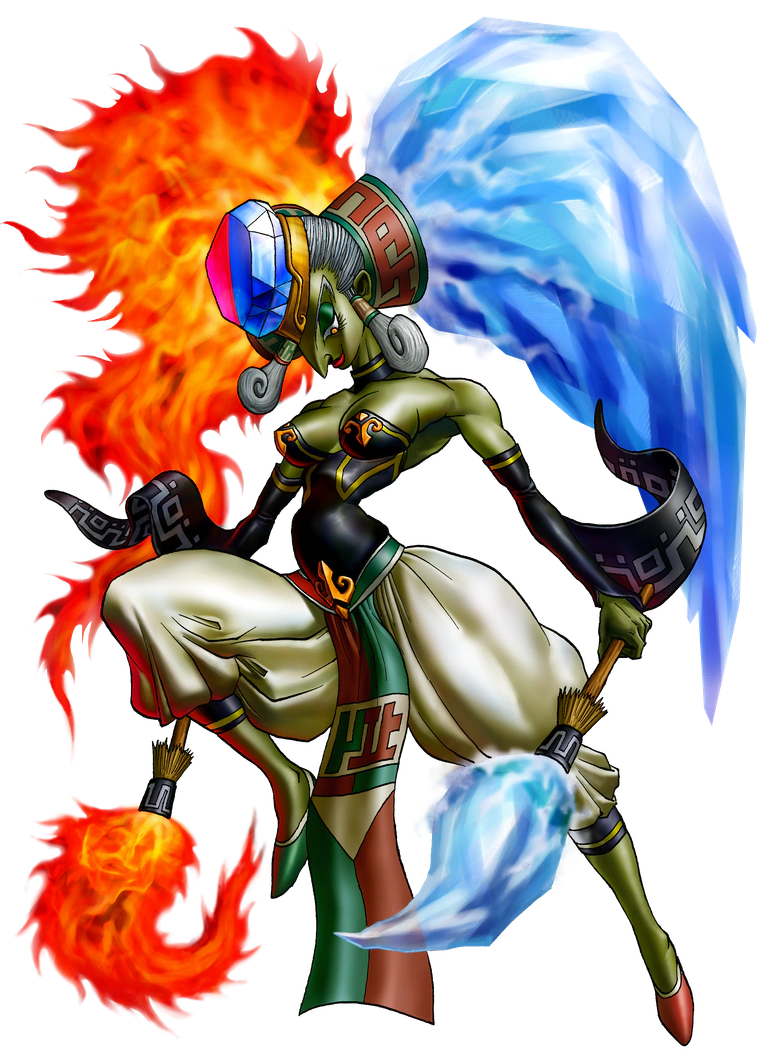
The main plot of the Oracle Series as a whole has Twinrova orchestrating an elaborate plot to revive Ganon using their minions they called from darkness, Veran and General Onox, to light the Flame of Sorrow and the Flame of Destruction respectively, and the ultimate kidnapping of Princess Zelda, the world's symbol of hope, to light the Flame of Despair. They intend to use the three flames to revive Ganon. Their final move is to sacrifice Zelda to Ganon for him to use as a vessel. When Link saves Zelda, Twinrova decides to sacrifice themselves as vessels for Ganon. Because this is not the way the rites were intended to be done, the revival of Ganon instead results in a fairly mindless version of him that only seeks to destroy everything rather than rule over everyone. Link defeats Ganon, and, along with Princess Zelda, escapes the Room of Rites just before it collapses. This marks the true ending of Oracle of Seasons and Oracle of Ages.
Linking Secrets
A staplepoint of the Oracle Series is its unique ability to interlink using "secrets", or passwords. By linking secrets, Link can work with Farore to obtain rare items which he could not otherwise get. This is also the only way to link both games together into one single plot, as opposed to two alternate ones. To complete the entire series, the two games must be linked together in order to defeat both Veran and General Onox in one single storyline, as this is the only possible way to encounter Twinrova and eventually defeat Ganon.
In a Linked Game, various other (although more subtle) changes to the plot occur which further interlink the storyline of both games. This includes the meeting of Queen Ambi with her lover, the Cap'n, in Oracle of Seasons, or the appearance of Rosa on Crescent Island in Oracle of Ages.
Development
Early Development
The origin of Oracle of Seasons and Oracle of Ages began when Capcom game director Yoshiki Okamoto proposed to Shigeru Miyamoto, creator of The Legend of Zelda series, a remake of the original The Legend of Zelda for the Game Boy Color. Later on, it was decided that if the release was successful, it would be followed up with several other titles to be released in quick sucession. There was talk of remaking the second title in the series, The Adventure of Link as well, followed by four completely original titles, making for a total of six games. A few months later, it was said that there would be only three sequels following up the first release. It was said these games could be played "in any order", seemingly the true beginnings of Oracle of Seasons and Oracle of Ages.

The development of the games was tumultuous. Rather than prioritize gameplay, as was Miyamoto's convention, the development began with scenarios (story and characters) developed by Capcom subsidiary Flagship. Although Okamoto wished to begin with the remake of The Legend of Zelda before moving to a more ambitious project, some members of the staff believed that the first stage should be skipped and the development of a new Legend of Zelda title started right away. Since the development began with the scenario instead of the gameplay, the team encountered several difficulties in developing the maps, often having to "redo the maps and the scenario to make all the elements fit." Progress was additionally hindered by the size of the Game Boy Color's screen.
The Triforce Series
As Okamoto encountered problems in the development of the remake, Shigeru Miyamoto instead proposed the creation of the "Triforce Series." Each title was to refer to a piece of the Triforce (Chapters of Power, Wisdom, and Courage), revolving around a pivotal character (oracle) according to the chapter (Din for the Chapter of Power, Nayru for Wisdom, Farore for Courage). Each game was to focus on a different gameplay element of The Legend of Zelda series: the Chapter of Wisdom was to be puzzle-based, the Chapter of Power, action-based. The gameplay focus of the third title was never revealed. Each game was to have a new gameplay theme:

These three games became known as the "Mysterious/Mystical Seed Trilogy" composed of Mystical Seed of Power, Mystical Seed of Wisdom, and Mystical Seed of Courage. Mystical Seed of Power was said to be adapted from Capcom's original project, The Legend of Zelda remake. Similarities to The Legend of Zelda can be seen to this day in Oracle of Seasons.
A unique feature of the three games was to be their ability to be linked together using a password system (see Linking Secrets above). However, the coordination of three games proved to be too complex. To simplify, Mystical Seed of Courage was cancelled, thus reducing the series to two titles. Oracle of Ages was adapted from Mystical Seed of Wisdom (using Courage's time mechanic instead), and Oracle of Seasons from Mystical Seed of Power. Together, they became known as Oracle of Seasons and Oracle of Ages of today.
The Chapter of Power had a season theme, featuring the Rod of Seasons to alter the four seasons and solve puzzles.
The Chapter of Wisdom featured an item called the Magic Paintbrush which was to be used to solve color-themed puzzles.
The Chapter of Courage was to have a theme of time, using morning, noon, evening and night to solve puzzles.
Timeline Placement
According to Hyrule Historia, Oracle of Seasons and Oracle of Ages are a sequel to A Link to the Past and a prequel to Link's Awakening, all of which feature the same Link, under the "Downfall" timeline split, where Ganon defeated the Hero of Time in Ocarina of Time. Some time after defeating Ganon at the end of A Link to the Past, Link is transported by the Triforce to Holodrum where Oracle of Seasons takes place. After defeating Onox, Link travels to Labrynna and Oracle of Ages takes place. Link then defeats Ganon in the linked ending of the Oracle games and leaves Labrynna by boat to continue his training in new lands. After completing his training, Link travels back towards Hyrule by boat when he is shipwrecked on Koholint Island and Link's Awakening takes place.
According to Encyclopedia, Oracle of Seasons and Oracle of Ages take place after A Link to the Past and Link's Awakening.
Sales
Both Oracle of Ages and Oracle of Seasons were commercially successful, each selling almost 4 million copies worldwide.
Reviews
Both titles of Oracle of Seasons and Oracle of Ages were commonly given identical scores in critical reviews, both receiving a 9.2 out of 10 at Gamespot, and a perfect 10/10 rating of "Masterpiece" at IGN. With the looming approach of the Game Boy Advance, Gamespot believed that Oracle of Seasons and Oracle of Ages was "sending out the Game Boy Color with a bang." IGN's Chris Carle went even further, saying: "there are no two games better than Oracle of Ages and Oracle of Seasons currently available on the system." The series was somewhat criticized for its audio. However, taking into consideration the limitations of the Game Boy Color system, it was noted to fare quite well in comparison to other titles on the system. The Oracle series was praised on IGN for its vibrant-colored graphics. Due to the "panoply of hues" seen in the changing of the seasons, IGN considers Oracle of Seasons to be the more graphically impressive of the two.
Although receiving identical ratings of 5 out of 5 in the Nintendo Power magazine, Oracle of Seasons was placed before Oracle of Ages in the Nintendo Power Top 200 Games List, the former ranking 34th on the list, the latter 39th. In August 2008, Oracle of Seasons and Ages were ranked fourth and fifth respectively in Nintendo Power's top Game Boy (Color) games of all time. Together, the Oracle Series ranked 57th in the Top 100 greatest Nintendo games of all time.
Fan Reception
Both games of Oracle of Seasons and Oracle of Ages received positive fan reviews, maintaining identical user scores of 9.1 at Gamespot. IGN users also rank Oracle of Ages at 9.1, although Oracle of Seasons holds the slightly higher score of 9.2.
Sources
Adapted from the original article, under GFDL 1.3.